You’re considering a timber frame pavilion, but the price tag leaves you wondering where your money actually goes. Material costs, labor, site preparation, permits, and roofing options all contribute to the final bill, which can range from $8,000 to $70,000 or beyond. Understanding these components helps you make informed decisions about where to invest and where you might cut costs without compromising quality. Here’s what you need to know.
Average Timber Frame Pavilion Costs by Size
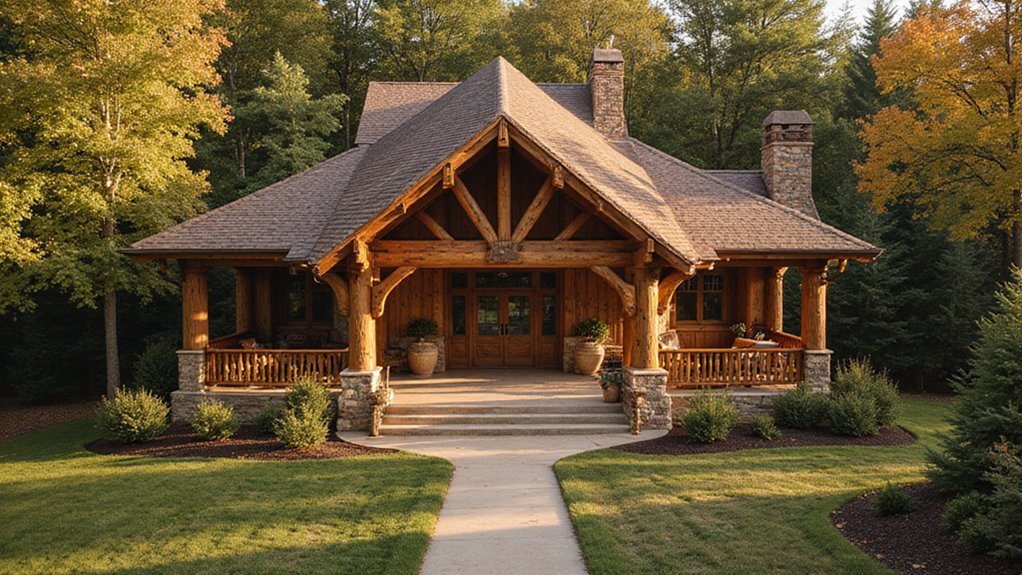
How much you’ll spend on a timber frame pavilion depends largely on its size, which is one of the most crucial factors affecting the total project cost. Small pavilions, measuring roughly 12 by 12 feet, typically range from $8,000 to $15,000, while medium-sized structures between 16 by 20 feet generally cost $20,000 to $35,000. Larger pavilions exceeding 20 by 24 feet can reach $40,000 to $70,000 or more. These price variations reflect the increased materials, labor, and structural complexity required for bigger designs. You’ll also notice that custom features, roof styles, and finishing options profoundly influence your final expenses. Understanding these size-based price ranges helps you establish a realistic budget before beginning your pavilion project.
Cost Per Square Foot: Your Pricing Baseline
A practical way to estimate your timber frame pavilion costs involves calculating the price per square foot, which gives you a straightforward baseline for comparing different project sizes and designs. Most timber frame pavilions range from $50 to $150 per square foot, depending on materials, complexity, and location. You’ll find that basic open-sided structures cost less than fully enclosed pavilions with amenities like electrical systems or premium wood selections. To calculate your project’s cost, you multiply your pavilion’s square footage by your region’s average per-square-foot rate. This method helps you quickly assess whether a 200-square-foot design fits your budget compared to a 400-square-foot option, making it easier to evaluate trade-offs between size and affordability.
Real-World Budget Examples: 12×12 to 20×30 Pavilions
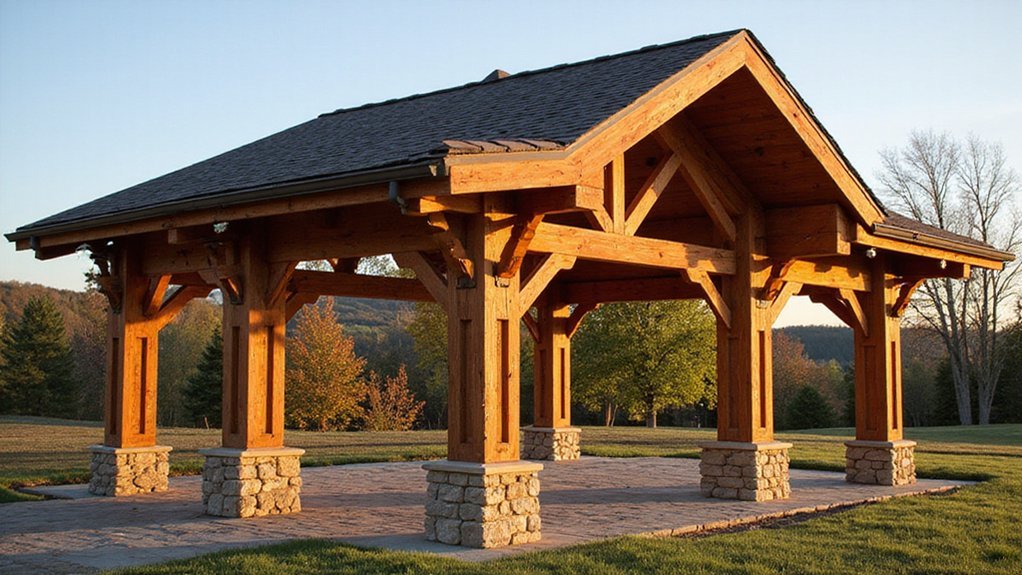
Now that you understand how to calculate costs per square foot, you can apply those numbers to specific pavilion sizes you’re likely considering for your property. A 12×12 pavilion, totaling 144 square feet, typically ranges from $3,456 to $7,200 using the $24–$50 per square foot benchmark. A 16×16 structure covers 256 square feet and costs approximately $6,144 to $12,800. For larger installations, a 20×20 pavilion spanning 400 square feet runs $9,600 to $20,000. The substantial 20×30 option provides 600 square feet and costs between $14,400 and $30,000. These figures include materials and basic labor, though site preparation, permits, and finishing treatments may increase your final expenses. Evaluating your specific needs helps determine which size delivers the best value.
Material Costs: Timber, Hardware, and Hidden Expenses
Three main categories make up the material expenses for your timber frame pavilion: the wood itself, the fasteners and connectors that hold everything together, and the often-overlooked costs that catch many builders by surprise. Your lumber costs depend on wood species, quality grade, and local availability, with premium timber running considerably higher than standard options. Fasteners like bolts, brackets, and metal connectors represent 10-15% of your material budget, and you’ll want corrosion-resistant hardware for longevity. Hidden expenses include delivery fees, waste allowance for cutting and mistakes, weatherproofing sealants, and structural reinforcements you discover during construction. Planning for a 15% contingency buffer helps you cover unexpected material price increases and unforeseen structural requirements that emerge once work begins.
Site Prep and Foundations: The Hidden Costs
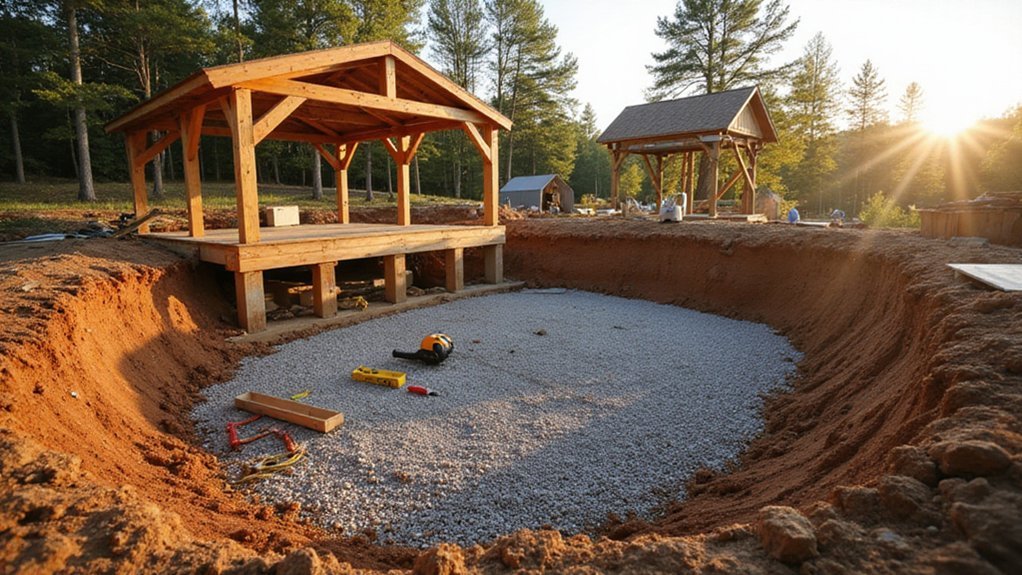
Before you even begin assembling your timber frame, you’ll need to prepare the ground beneath it, and this phase of your project carries costs that many builders underestimate or overlook entirely. Site preparation involves clearing vegetation, leveling uneven terrain, and removing debris, which can range from $500 to $3,000 depending on your land’s condition. Foundation work represents your largest expense here, requiring either concrete footings, a full concrete slab, or a gravel base system. These foundations prevent settling and water damage, costing $2,000 to $8,000 total. You’ll also need soil testing in some areas, drainage solutions, and permit fees that add another $500 to $1,500. Proper planning during this stage protects your entire investment.
Labor Costs: What Installation Really Adds
Once your foundation’s in place, you’ll discover that skilled labor represents one of your project’s most considerable expenses, often equaling or exceeding the cost of materials themselves. Timber frame assembly requires experienced carpenters who understand joinery, structural integrity, and precision cutting, and you’ll pay premium rates for this expertise. Installation timelines vary depending on pavilion complexity, size, and site accessibility, typically ranging from several weeks to months. Labor costs generally include foundation work completion, frame assembly, roof installation, and finishing details. You’ll want to obtain multiple quotes from contractors experienced in timber frame construction, as their pricing structures and efficiency levels differ markedly.
Permit and Design Costs: Budget for Approvals
While you’re planning your timber frame pavilion project, you’ll need to account for permits and design fees, which can considerably impact your overall budget and timeline. Permit costs vary widely depending on your location, ranging from $200 to $2,000 or more, and they’re essential for ensuring your structure meets local building codes and safety standards. Design fees, typically charged by architects or engineers, usually run between $1,500 and $5,000, depending on your pavilion’s complexity and size. You’ll also need to budget for inspections during construction, which add additional costs but guarantee your project complies with regulations. Getting these approvals upfront prevents costly delays and rework later, making them a worthwhile investment in your project’s success.
Roofing Costs: Metal, Shingles, or Open-Air
The roofing system you select will considerably influence both your pavilion’s appearance and your total project expenses, with costs varying dramatically based on the material and design you choose. Metal roofing typically costs between $8 to $15 per square foot, offering durability and longevity that justifies the initial investment. Asphalt shingles provide a budget-friendly alternative at $3 to $5 per square foot, though they’ll require replacement sooner. Open-air pavilions eliminate roofing expenses entirely but leave your structure exposed to weather, limiting usability during rain or intense sun. You’ll also need to factor in installation labor, which ranges from $2 to $5 per square foot depending on complexity and your local market rates.
Flooring Costs: Concrete, Wood, or Gravel
Your flooring choice will drastically affect both the comfort and durability of your timber frame pavilion, with costs ranging from budget-friendly to premium depending on the material you select. Gravel flooring is the most economical option, costing between $1 to $3 per square foot, though you’ll need regular maintenance and raking. Concrete offers superior durability and longevity, averaging $6 to $12 per square foot, providing excellent weather resistance and minimal upkeep. Wood flooring creates an aesthetically pleasing surface that complements timber framing beautifully, but it’s the priciest choice at $10 to $25 per square foot, requiring periodic sealing and maintenance. Consider your climate, foot traffic expectations, and maintenance commitment when selecting your flooring material.
Where to Trim Budget Without Sacrificing Quality
Several strategic decisions can help you reduce timber frame pavilion expenses while maintaining structural integrity and visual appeal. You can choose locally sourced timber, which lowers transportation costs considerably, and select standard beam sizes rather than custom dimensions. Simplifying your roof design by eliminating complex angles reduces labor expenses without compromising protection. Consider postponing decorative elements like railings or elaborate trim work, which you can add later when budget allows. Selecting a basic stain or sealant instead of premium finishes cuts material costs extensively. You might also reduce the pavilion’s square footage slightly, maintaining functionality while decreasing overall material requirements. Finally, handling some finishing work yourself, if capable, eliminates contractor labor charges and preserves your pavilion’s essential quality and durability.
Conclusion
You’ll find that understanding timber frame pavilion costs means examining size, materials, and site requirements together. You’ll discover that budgeting $50 to $150 per square foot gives you a realistic baseline, that calculating roofing and foundation expenses prevents surprises, and that comparing custom features against standard options helps you spend wisely. You’ll ultimately build a pavilion that matches both your vision and your financial goals.