
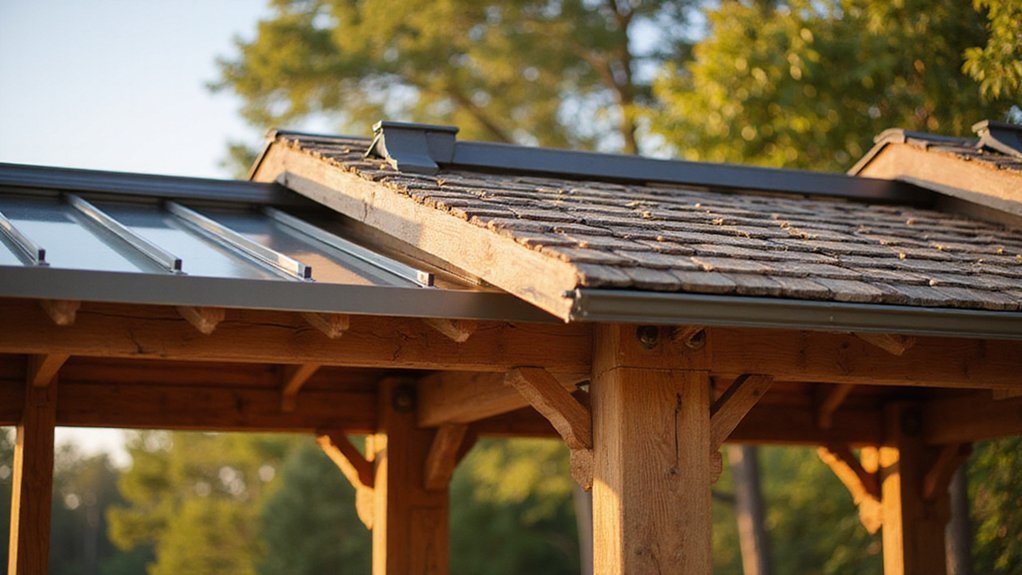
Imagine you’ve just completed a beautiful timber frame pavilion in a region that experiences heavy rainfall and temperature fluctuations—now you’re faced with a critical decision that will determine whether your structure thrives or deteriorates. The roof you choose must protect your wood frame from moisture damage while accommodating the natural movement that occurs as timber expands and contracts with seasonal changes. But which material actually delivers on both fronts?
Climate Constraints for Timber Frame Pavilions

Several climate factors’ll noticeably impact how you design and build a timber frame pavilion, since wood naturally responds to temperature changes, moisture levels, and weather exposure in ways that other building materials don’t. You’ll need to ponder your region’s rainfall patterns, as excessive moisture can cause wood rot and structural damage over time. Temperature fluctuations create wood expansion and contraction, which requires proper ventilation and spacing in your design. Snow load capacity becomes crucial if you’re building in northern climates, demanding stronger roof structures to support seasonal weight. UV exposure from intense sunlight degrades wood finish and causes checking, so you’ll want protective coatings and strategic roof overhangs. Wind resistance matters considerably in coastal or plains regions, necessitating reinforced connections and appropriate roof pitch angles for stability.
Which Roofing Materials Actually Work With Timber Frames?
Because timber frame pavilions demand roofing materials that’ll work harmoniously with wood’s natural movement and breathing properties, you’ll need to choose carefully among options that provide durability without restricting the wood’s ability to expand and contract with temperature and humidity changes. Metal roofing stands out as an excellent choice, offering flexibility and longevity while allowing wood movement beneath it. Asphalt shingles work reasonably well too, though they require more frequent replacement than metal alternatives. You should avoid rigid materials like concrete tiles, which can crack when wood shifts underneath. Rubber membranes and standing-seam metal systems provide superior protection while accommodating wood’s natural behavior, making them ideal for timber frame structures that’ll endure decades of environmental stress.
Metal Roofing for Timber Frames: Does It Outlast Everything Else?

When you’re planning a timber frame pavilion that’ll stand strong for decades, metal roofing emerges as one of your most dependable choices, consistently outperforming other materials in longevity and compatibility with wood’s natural characteristics. Metal roofs typically last 40 to 70 years, far exceeding asphalt shingles’ 15 to 20 year lifespan. You’ll appreciate metal’s resistance to rot, insects, and weathering, which protects your timber frame from moisture damage. The lightweight nature of metal panels reduces stress on your wood structure, preventing sagging over time. Additionally, metal roofing reflects sunlight effectively, minimizing heat absorption and protecting the wood beneath from thermal stress. Installation requires proper ventilation above your timber frame to prevent condensation buildup, ensuring your wood remains dry and structurally sound for generations.
Asphalt Shingles: The Budget-Friendly Failsafe
If you’re building a timber frame pavilion on a budget, asphalt shingles offer you an affordable roofing solution that delivers solid protection without requiring the significant financial investment that metal or premium materials demand. You’ll appreciate their straightforward installation process, which keeps labor costs down and allows many contractors to complete your project quickly. Asphalt shingles come in various colors and styles, enabling you to customize your pavilion’s appearance to match your preferences. While they typically last fifteen to twenty years, they require regular maintenance, including periodic inspections and debris removal. You should expect eventual replacement sooner than metal alternatives, but their low upfront cost makes them practical for budget-conscious builders. Their widespread availability guarantees easy repairs and replacements whenever you need them.
Polycarbonate Panels: Light, Modern, and Weather-Resistant

While asphalt shingles remain a practical choice for cost-conscious builders, polycarbonate panels present you with a distinctly different roofing approach that combines modern aesthetics with superior weather performance. These transparent or translucent panels allow natural light to filter through your pavilion, creating a bright, airy atmosphere without requiring additional skylights. You’ll appreciate their exceptional durability, as polycarbonate resists impact, UV rays, and extreme temperature fluctuations better than traditional materials. Installation involves securing panels to your timber frame using specialized brackets and fasteners, which you can accomplish with basic carpentry skills. The panels require minimal maintenance beyond occasional cleaning, and they won’t rot, warp, or degrade like wood. While polycarbonate costs more upfront than asphalt shingles, its longevity and low maintenance make it a worthwhile investment for permanent pavilion structures.
Wood Shakes: Rustic Beauty That Matches Timber Frames
Why would you choose wood shakes for your timber frame pavilion when so many modern materials exist? Wood shakes offer authentic aesthetic appeal that complements timber frames beautifully, creating a cohesive, natural appearance throughout your structure. They’re individual wooden pieces, typically split from cedar or oak, that you layer to form a weather-resistant roof. Wood shakes provide excellent insulation, keeping your pavilion cooler during summer months and warmer during winter. They develop a natural patina over time, enhancing their rustic character rather than deteriorating. However, you must maintain them regularly by cleaning debris, treating against rot, and replacing damaged shakes. While they require more upkeep than synthetic alternatives, wood shakes deliver unmatched visual warmth and durability that lasts decades when properly cared for.
Living Roofs: Green Solutions for Eco-Conscious Pavilions
As you deliberate roofing options that’ll benefit both your pavilion and the environment, living roofs—also called green roofs—offer a compelling choice that transforms your structure into an active ecological feature. You’ll install a waterproof membrane, drainage layer, soil, and vegetation across your timber frame’s top surface, creating insulation that reduces temperature fluctuations year-round. The plants absorb rainwater, decreasing runoff and preventing flooding in surrounding areas. Additionally, living roofs attract pollinators and birds, enhancing local biodiversity while improving air quality. You’ll need to ponder maintenance requirements, including regular watering and weeding, particularly during establishment. The added weight demands structural reinforcement of your timber frame, necessitating professional engineering assessment beforehand. Despite higher initial costs, living roofs provide long-term environmental benefits and extended roof membrane protection.
Material Costs and Maintenance for Timber Frame Roofs
Once you’ve selected your roofing material, understanding the financial investment and upkeep required’ll help you make an informed decision that aligns with your budget and lifestyle. Metal roofing typically costs more initially but demands minimal maintenance, requiring only occasional inspections and cleaning. Asphalt shingles offer affordability upfront yet need replacement every fifteen to twenty years, making long-term costs considerable. Wood shakes demand regular treatment against rot and insects, increasing maintenance expenses extensively. Living roofs require specialized installation and consistent upkeep involving irrigation and vegetation management. You’ll want to calculate both initial material expenses and projected maintenance costs over your pavilion’s expected lifespan, ensuring your choice remains financially sustainable and practical for your specific situation and climate conditions.
Mistakes That Damage Timber Frame Roofs
Even though you’ve invested considerable time and money into selecting the right roofing material, common installation and maintenance errors can substantially compromise your timber frame pavilion’s structural integrity and longevity. You’ll want to avoid improper flashing installation, which allows water to seep into wooden joints and causes rot. Neglecting regular inspections means you’ll miss early signs of damage, such as missing shingles or membrane punctures. You shouldn’t ignore debris accumulation on your roof, as it traps moisture and promotes decay. Inadequate ventilation creates condensation that weakens timber framing over time. You must also prevent foot traffic on certain roofing materials, which can cause cracks and premature deterioration. Finally, you shouldn’t delay repairs when damage appears, since small problems escalate into expensive structural failures.
Five Questions to Lock in Your Final Choice
After you’ve reviewed the common mistakes that damage timber frame roofs, you’re ready to narrow down your roofing options by answering five essential questions that’ll guide you toward the best choice for your pavilion. First, consider your climate: Does your region experience heavy snow, intense rain, or extreme heat? Second, evaluate your budget constraints and the long-term maintenance costs you’re willing to undertake. Third, determine the aesthetic style you want your pavilion to reflect, whether traditional or contemporary. Fourth, assess the structural support your timber frame can provide for different roofing materials. Finally, examine local building codes and regulations that might restrict your options. These systematic questions’ll help you eliminate unsuitable materials and confidently select the roof that best matches your pavilion’s specific requirements.
Conclusion
You’ve now explored how different roofing materials interact with timber frames, from metal’s impressive durability to asphalt’s wallet-friendly nature. Your pavilion’s climate, budget, and maintenance tolerance will guide you toward the option that ages most gracefully. By carefully weighing these factors and avoiding common installation oversights, you’ll select a roof that lets your timber structure flourish rather than struggle against the elements for decades ahead.