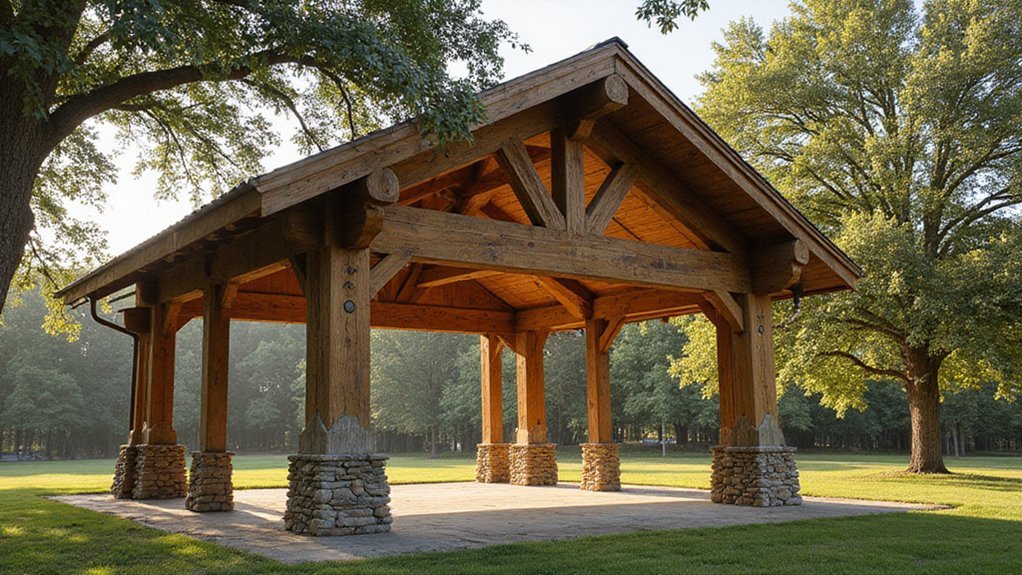
You’re considering a timber frame pavilion, but you’re uncertain whether the $15,000 to $50,000 initial cost makes financial sense. This guide examines whether your investment truly pays off over decades, exploring how durability, climate conditions, maintenance cycles, and alternative materials factor into your long-term value equation. Understanding these variables will reveal whether a pavilion represents genuine savings or an expensive mistake.
Initial Cost vs. Long-Term Return on Investment
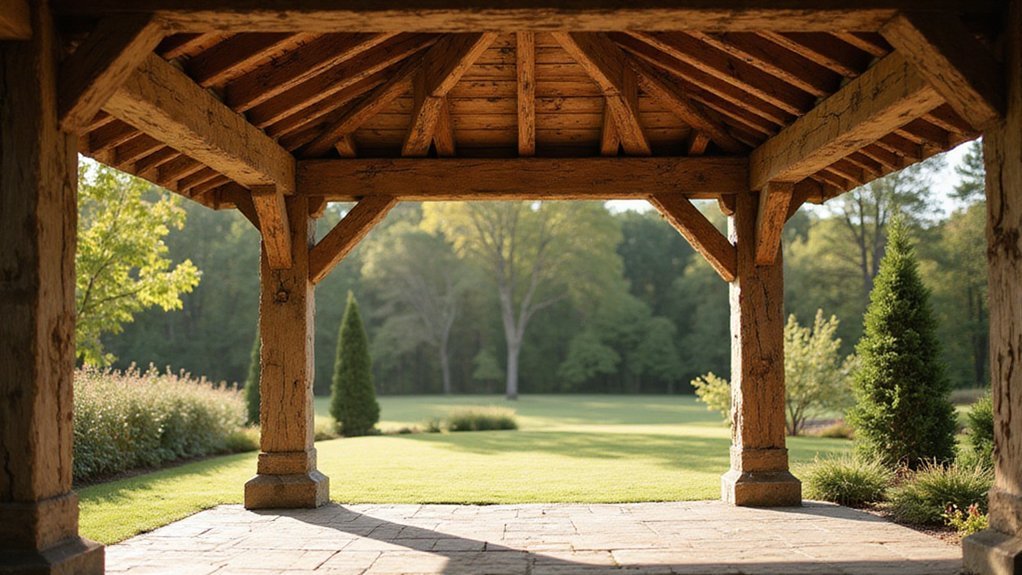
While timber frame pavilions require a substantial upfront investment, understanding how they’ll perform financially over decades helps you make a well-informed decision about whether they’re right for your property. You’ll typically spend $15,000 to $50,000 initially, depending on size and customization, but these structures often last 50+ years with proper maintenance. You’ll recoup your investment through increased property value, reduced entertaining costs by hosting events at home, and minimal yearly upkeep expenses. Unlike cheaper alternatives that require replacement every 10-15 years, your timber pavilion appreciates over time. By calculating your annual savings and property value gains, you’ll discover that the long-term financial benefits frequently justify the initial expense, making timber frame pavilions a sound investment for homeowners planning to stay long-term.
The ROI Evaluation Framework: What to Measure
To determine whether a timber frame pavilion truly delivers on its financial promise, you’ll need to measure specific metrics that reveal how your investment performs over time. Track your initial construction costs, including materials, labor, and permits, then monitor annual maintenance expenses like staining, repairs, and inspections. Calculate your annual usage value by estimating how often you’ll host gatherings or events that would’ve otherwise required renting venues. Measure property value increases by comparing your home’s assessed value before and after construction. Document energy savings if your pavilion reduces cooling costs during summer months. Finally, evaluate longevity by tracking structural integrity over years, ensuring your timber frame ages predictably. These metrics collectively show whether your pavilion generates genuine financial returns beyond recreational enjoyment.
How Climate Affects Durability, Maintenance, and Payback
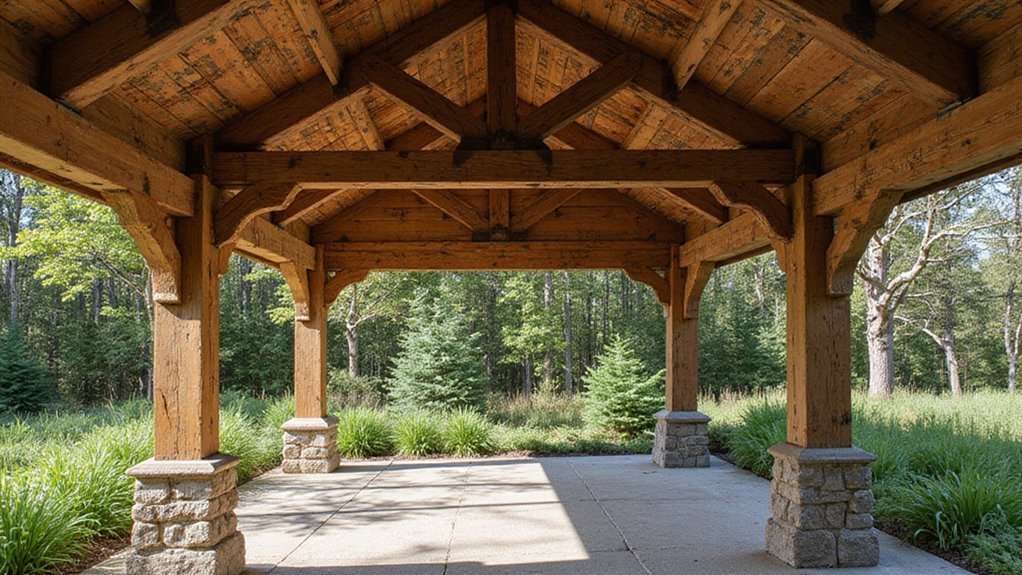
Because different regions experience distinct weather patterns, your timber frame pavilion‘s lifespan, upkeep requirements, and financial returns‘ll vary considerably depending on where you live. Humid climates accelerate wood rot and insect damage, demanding more frequent treatments and repairs that increase maintenance costs greatly. Dry regions reduce these biological threats but expose wood to UV damage and splitting from temperature fluctuations. Areas with heavy snowfall require stronger structural support and regular clearing to prevent overloading. Coastal environments introduce salt corrosion that damages fasteners and finishes rapidly. Your ROI calculation must account for these climate-specific maintenance expenses across your pavilion’s projected lifespan. Understanding your local climate patterns helps you estimate realistic upkeep budgets and predict when major repairs’ll occur, ultimately determining whether your investment generates acceptable returns.
Timber Frame Lifespan: How 50+ Years of Durability Cuts Costs
Understanding your local climate’s impact on maintenance costs sets the stage for appreciating one of timber frame pavilions‘ most significant financial advantages: their exceptionally long operational lifespan. When you invest in quality timber construction with proper maintenance, you’re securing a structure that’ll last 50 years or more, dramatically reducing your cost-per-year expenses. This extended durability means you’re spreading your initial investment across decades rather than years, which substantially lowers your annual financial burden. You’ll also avoid the expense of replacing an entire pavilion prematurely, which would require significant capital reinvestment. By choosing timber frames, you’re making a decision that prioritizes long-term financial efficiency, allowing you to enjoy reliable shelter while maintaining predictable, manageable maintenance expenditures throughout the structure’s lifespan.
Timber Pavilion Maintenance Costs: Planning for 5-Year Cycles
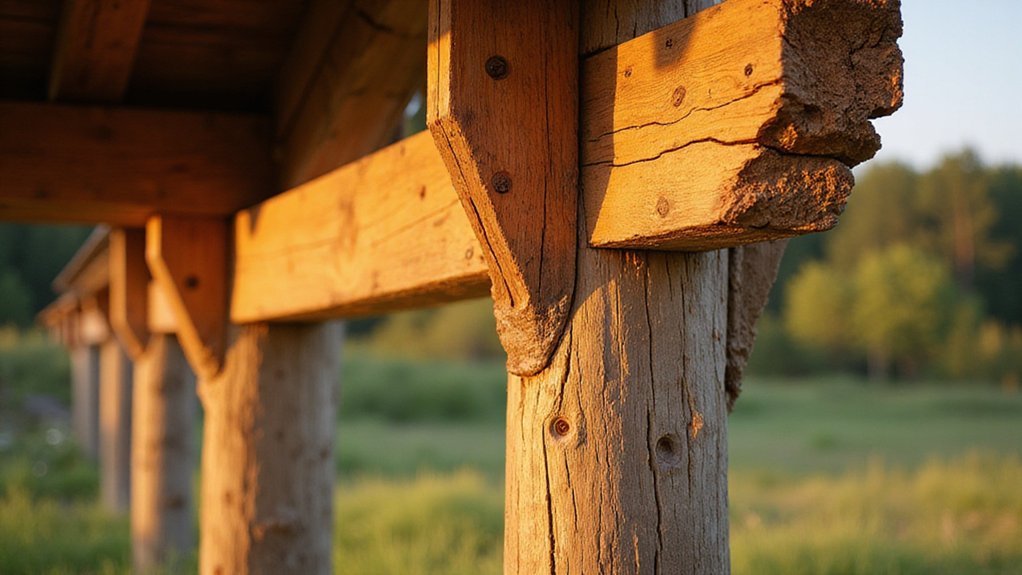
While your timber frame pavilion can last 50+ years with proper care, you’ll need to establish a regular maintenance schedule that typically follows a 5-year cycle to keep your structure in ideal condition and safeguard your long-term investment. During these cycles, you’ll address major tasks like sealing or staining exposed wood surfaces, inspecting and repairing structural joints, checking for pest damage, and treating any areas showing weathering. Budget approximately $500 to $2,000 per cycle, depending on your pavilion’s size and current condition. Completing these systematic maintenance intervals prevents small issues from becoming expensive repairs, ultimately extending your structure’s lifespan and maintaining its aesthetic appeal. Planning ahead for these predictable costs guarantees you’re financially prepared for essential upkeep.
How Timber Pavilions Boost Home Resale Value
Your investment in maintaining a timber frame pavilion doesn’t just preserve the structure itself—it actively increases your property’s market appeal and resale value when it comes time to sell. Potential buyers view well-maintained timber pavilions as valuable outdoor living spaces that justify higher property prices, often adding 5-10% to your home’s overall value. A structurally sound pavilion signals to buyers that you’ve invested in quality property maintenance, reducing their concerns about hidden expenses. Additionally, timber pavilions create desirable entertaining areas that buyers actively seek, making your property more competitive in the real estate market. When you’ve documented your maintenance history and repairs, you’re providing documented proof of responsible ownership, which strengthens buyer confidence and supports your asking price during negotiations.
Timber vs. Steel, Aluminum, and Vinyl: Which Lasts Longest?
When you’re choosing a material for your pavilion, one of the most important factors to ponder is how long that material will actually last, since durability directly affects your maintenance costs, replacement timeline, and long-term investment value. Timber typically lasts 15-20 years with proper treatment and maintenance, requiring regular sealing and inspection. Steel structures can endure 30-50 years if you protect them from rust through coating and maintenance. Aluminum pavilions last 20-30 years with minimal upkeep since they’re naturally corrosion-resistant. Vinyl frames offer the longest lifespan, often reaching 25-40 years without significant deterioration. However, longevity depends heavily on your climate, installation quality, and maintenance commitment, making these estimates variable based on your specific circumstances.
Weather Protection: How a Covered Pavilion Extends Your Outdoor Season
Beyond selecting a material that’ll withstand decades of use, you’ll want to ponder how a pavilion’s roof structure directly impacts your ability to enjoy outdoor spaces throughout the year, since weather protection fundamentally changes when and how you can use your backyard or property. A solid roof shields you from rain, snow, and intense UV rays, allowing you to entertain guests or relax outside during seasons when you’d otherwise remain indoors. You’ll extend your usable outdoor months considerably, transforming a spring-through-fall space into a year-round destination. This expanded accessibility increases the value you extract from your investment, as you’re no longer confined by seasonal weather limitations. Proper drainage and roofing materials guarantee water doesn’t accumulate, preventing damage while maintaining comfortable conditions underneath.
Adaptability: Upgrading and Repurposing Your Pavilion as Needs Change
Unlike structures that serve a single fixed purpose, timber frame pavilions offer remarkable flexibility to adapt as your lifestyle, family size, and property needs evolve over time. You can easily add walls, screens, or shade cloths to enhance protection and functionality. If you’re hosting larger gatherings, you can expand the covered area or install additional support posts without compromising the structure’s integrity. You might upgrade electrical systems, add heating elements, or incorporate storage solutions as your requirements change. The modular design of timber frames allows you to reconfigure the space without complete reconstruction. This adaptability means your pavilion investment remains valuable and relevant, accommodating everything from family dinners to business events, ensuring long-term utility and financial returns on your initial investment.
The Hidden Returns: Entertaining Space and Guest Experience
As your timber frame pavilion becomes the centerpiece of your outdoor living area, it’ll transform how you entertain and connect with family and friends, creating an environment that naturally encourages gatherings and social interaction. You’ll find that the covered space protects guests from unpredictable weather, extending your entertaining season throughout the year. The open-sided design fosters conversation and connection, while the architectural appeal adds visual interest to your property. Your guests’ll appreciate the comfortable, sheltered atmosphere that eliminates concerns about sun exposure or sudden rain. This improved entertaining capability increases your home’s social value, making it a natural gathering destination. When you eventually sell your property, potential buyers recognize these entertaining advantages, directly influencing their perceived value and willingness to invest in your home.
Conclusion
You’ll find that a timber frame pavilion justifies its $15,000 to $50,000 investment through decades of use, minimal maintenance, and increased property value. By choosing quality timber construction, you’re securing a structure that outlasts cheaper alternatives by 35+ years, meaning you’re not replacing it every decade. Isn’t it smarter to invest once in durability rather than repeatedly in temporary solutions? Your long-term savings and enhanced outdoor living space make this decision financially sound.