
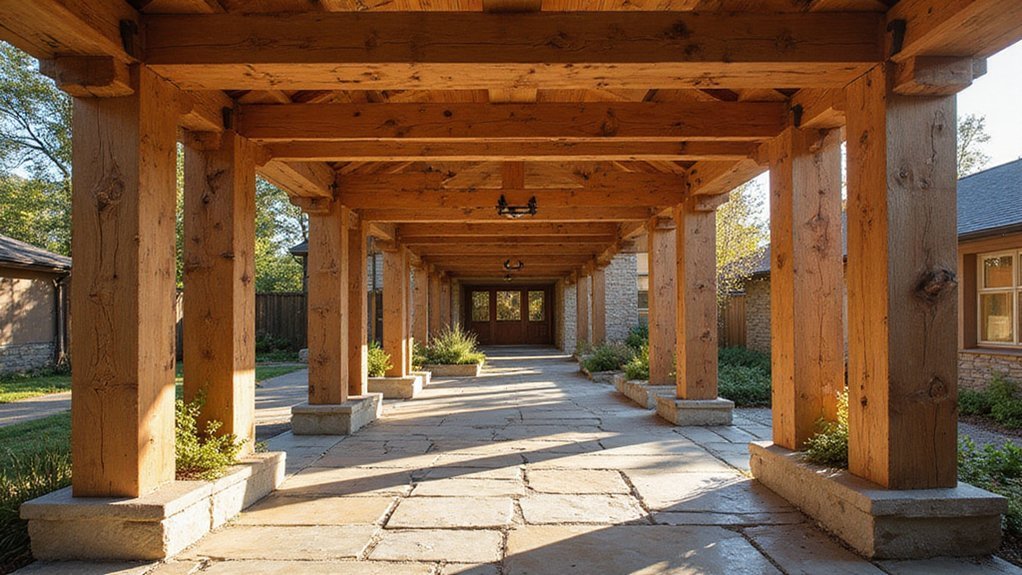
While some homeowners view timber pavilions as luxury additions, you can actually build one affordably by prioritizing function over aesthetics. You’ll need to assess your space, understand local building codes, and select appropriate materials before construction begins. This foundation determines whether your pavilion becomes a practical outdoor retreat or an expensive mistake.
Budget-Friendly Timber Pavilion Options (Start With Cost, Not Style)

When you’re planning to build a timber frame pavilion, you’ll want to start by determining your budget before you make any decisions about design or materials, because this approach helps you understand what’s actually possible within your financial constraints. You can reduce costs by selecting smaller dimensions, choosing locally sourced timber that doesn’t require expensive shipping, and opting for simpler roof designs instead of complex architectural features. Consider using pressure-treated pine or Douglas fir rather than premium hardwoods, which’ll substantially lower expenses while maintaining structural integrity. You might also explore DIY construction if you’ve got basic carpentry skills, hire local contractors who offer competitive rates, or purchase materials during off-season sales. Prioritizing functionality over elaborate aesthetics guarantees you’ll create a practical pavilion that fits your budget.
Measure Your Space: Sizing a Timber Pavilion for Your Yard
Before you sketch out your pavilion design or order materials, you’ll need to measure your yard carefully and determine the ideal size for your structure. Start by measuring the total length and width of your available space, then subtract at least six feet on all sides to allow for landscaping, pathways, and movement around the pavilion. Consider how you’ll use the structure—whether for dining, entertaining, or shelter—since this determines necessary dimensions. A modest pavilion typically ranges from 10 by 12 feet to 16 by 20 feet, though larger yards can accommodate bigger structures. Document overhead clearance requirements for trees and power lines, and verify that your chosen location has level ground. These measurements form the foundation for all subsequent design decisions.
Do You Need a Permit? Local Building Codes for Timber Pavilions

Once you’ve determined your pavilion’s dimensions and location, you’ll need to investigate permit requirements and building codes in your area before construction begins. Contact your local building department to learn what documentation and approvals you’ll need, as regulations vary considerably by municipality. Many jurisdictions require permits for structures over a certain size, typically 100 to 200 square feet, while others mandate permits regardless of dimensions. Building codes address foundation requirements, wind resistance, snow load capacity, and structural safety standards specific to your region’s climate conditions. You’ll also need setback requirements, which specify how far your pavilion must be from property lines and neighboring structures. Acquiring permits guarantees your project meets safety standards and safeguards your investment through proper inspections and documentation.
Modern vs. Traditional: Timber Pavilion Styles That Fit Your Home
Your choice between modern and traditional timber pavilion styles will profoundly impact how well your structure complements your home’s existing architecture and your personal aesthetic preferences. Traditional pavilions feature ornate details, curved brackets, and decorative post tops that reflect classic craftsmanship, making them ideal for historic or colonial-style homes. Modern pavilions, conversely, emphasize clean lines, minimalist design, and straightforward geometric shapes that align with contemporary architecture. When deciding between these styles, evaluate your home’s current design elements, exterior materials, and roofline characteristics. Consider how the pavilion’s visual weight and proportions‘ll interact with surrounding structures. You’ll also want to assess local architectural guidelines, as some neighborhoods favor specific stylistic approaches. Matching your pavilion’s style to your home guarantees aesthetic cohesion and enhances your property’s overall appeal and resale value.
Choose the Right Wood: Durability and Climate Considerations

Selecting the right wood for your timber frame pavilion is one of the most critical decisions you’ll make, as it directly affects how long your structure’ll last and how well it’ll withstand your region’s specific weather conditions. Hardwoods like oak, cedar, and teak offer superior durability and natural rot resistance, making them ideal for humid climates and areas with heavy rainfall. If you’re in a drier region, pressure-treated softwoods provide cost-effective protection against decay and insect damage. Consider your local temperature fluctuations, moisture levels, and UV exposure when selecting materials. Cedar and redwood work well in variable climates because they naturally resist weathering. Consulting local building experts guarantees you’ll choose wood species that’ll perform suitably for decades in your specific environment.
Open or Enclosed: How to Pick the Right Pavilion Structure
After you’ve settled on the right wood species for your climate and durability needs, the next major decision involves determining whether your pavilion’ll be completely open, partially enclosed, or fully covered. Open pavilions offer maximum airflow and unobstructed views, making them ideal for warm climates where shade matters most. Partially enclosed structures provide protection from wind and light rain while maintaining ventilation, suiting moderate climates well. Fully enclosed pavilions deliver complete weather protection and year-round usability, though they require additional insulation and ventilation considerations. Consider your primary use: entertaining guests favors open designs, while storage or workspace needs demand enclosed options. Evaluate your local weather patterns, including rainfall frequency and wind intensity, to determine which structure best matches your lifestyle and environmental conditions.
Roof Styles That Define Your Timber Pavilion’s Character
Because the roof’s design substantially impacts both the pavilion’s visual appeal and its practical functionality, you’ll want to carefully consider which style best complements your home’s architecture while meeting your structural needs. Gable roofs, featuring two sloping sides that meet at a peak, offer traditional charm and excellent water drainage for rainy climates. Hip roofs, sloping on all four sides, provide superior wind resistance and balanced proportions ideal for exposed locations. Shed roofs, with a single slope, deliver contemporary aesthetics and straightforward construction, though they’re less effective at shedding heavy precipitation. Arched roofs create dramatic visual interest and unique character, maximizing interior headroom. Your choice depends on your climate conditions, architectural style preferences, and maintenance capabilities, ensuring your pavilion performs ideally while enhancing your property’s overall design.
Layout Ideas: Dining, Lounging, and Cooking Zones
How you arrange your timber pavilion’s interior spaces will determine whether it functions as a practical outdoor living area or simply becomes an underutilized structure, so you’ll want to thoughtfully plan distinct zones that serve different purposes while maintaining a cohesive flow throughout the space. Consider positioning your dining area near the kitchen zone to minimize walking distances when serving meals, placing the cooking station along one perimeter wall to contain heat and smoke effectively. Position your lounging zone away from cooking activities, creating a comfortable retreat that’s protected from kitchen odors and cooking preparation mess. Guarantee adequate spacing between zones by using subtle design elements like level changes, strategic furniture placement, or partial screens that visually separate areas without blocking sightlines or creating cramped feelings throughout your pavilion’s layout.
How to Weatherproof Your Frame and Keep Wood in Top Shape
When you’ve invested time and money into building a timber frame pavilion, protecting that wood from the elements becomes one of your most important maintenance priorities, since exposure to rain, UV rays, temperature fluctuations, and humidity will gradually deteriorate even the strongest timber if you don’t take preventive measures. You should apply a high-quality wood sealant every two to three years, which creates a protective barrier against moisture penetration. Additionally, you’ll want to inspect your structure regularly for signs of rot, insect damage, or splitting, addressing problems immediately before they spread. Guarantee proper drainage around your pavilion’s foundation, maintain gutters if present, and consider installing metal flashing at joints where water might collect. These steps will tremendously extend your pavilion’s lifespan and preserve its structural integrity.
Maintenance Tips for Long-Lasting Timber Pavilions
Beyond the weatherproofing measures that protect your pavilion’s surface, you’ll need to establish a consistent maintenance routine that addresses the structure’s ongoing needs throughout each season and year. Inspect your timber frame quarterly for signs of rot, pest damage, or structural issues that could compromise stability. Clean debris from the roof and gutters regularly to prevent water accumulation and damage. Check all fasteners and joints annually, tightening any loose bolts or screws that may have shifted due to wood movement. Reapply sealant or stain every two to three years, depending on your climate’s intensity and exposure levels. Address small problems immediately before they escalate into costly repairs. Keep vegetation trimmed away from your pavilion to improve air circulation and reduce moisture retention around the wood.
Conclusion
You’ve now explored the essential considerations for creating your outdoor gathering space, from selecting budget-friendly materials to understanding local requirements and maintenance schedules. By thoughtfully evaluating your yard’s dimensions, climate conditions, and intended uses, you’ll craft a timber pavilion that gracefully ages alongside your home. Your investment in proper planning and quality materials guarantees this structure becomes a cherished extension of your living space for years to come.