
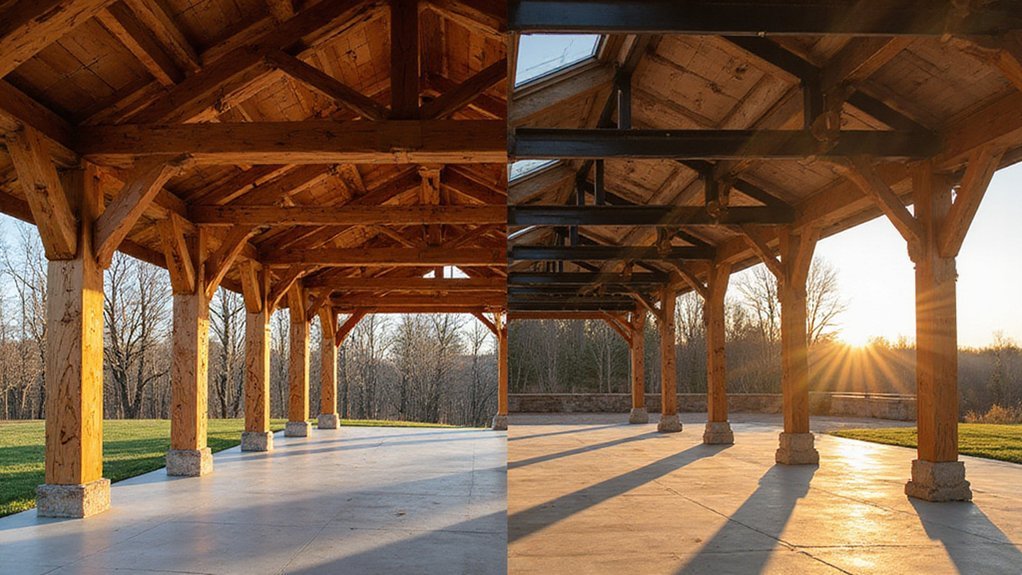
When you’re deciding between a timber frame pavilion and a standard pavilion, you’re looking at two fundamentally different construction approaches that homeowners often choose based on budget and aesthetics. Timber frame structures can cost 30-50% more upfront than standard pavilions, yet their long-term durability might offset that initial investment. Understanding how these pavilions differ in construction methods, installation timelines, and maintenance demands will help you determine which option truly serves your property’s needs best.
How Timber Frames and Standard Pavilions Are Built

Two fundamentally different construction methods distinguish timber frame pavilions from standard pavilions, each requiring its own set of materials, tools, and techniques. When you’re building a timber frame pavilion, you’ll use large wooden beams that are carefully jointed together, creating a strong skeletal structure that doesn’t require interior walls for support. Standard pavilions, however, rely on metal posts and trusses, which you’ll assemble using bolts, welding equipment, and precise measurements. With timber frames, you’re working with hand-cut joints that fit together like puzzle pieces, demanding skilled craftsmanship and specialized chisels. For standard pavilions, you’re following factory-made components that bolt together quickly. The timber approach takes longer but creates a rustic aesthetic, while standard construction offers faster installation and contemporary styling.
How Timber Frame and Standard Pavilions Perform Over Time
While the construction methods you’ve just learned about create very different structures, the real test of any pavilion comes from how well it holds up against weather, time, and regular use. Timber frame pavilions typically develop a weathered appearance as the wood grays naturally over time, but the structural integrity remains sound when properly maintained with periodic staining and sealing. Standard pavilions, built with metal or vinyl components, resist weathering differently, often requiring less maintenance but potentially showing rust or material degradation in harsh climates. Both types can last decades, though timber frames demand more active care through regular inspections and treatments. Standard pavilions may require component replacement, such as corroded fasteners or deteriorated finishes, depending on environmental conditions and material quality throughout their lifespan.
Where Your Budget Actually Goes

When you’re comparing timber frame and standard pavilions, the initial price tag tells only part of the story because your money gets distributed across different categories depending on which type you choose. With standard pavilions, you’ll invest primarily in the metal or vinyl structure itself, with modest spending on installation and basic foundation work. Timber frame pavilions, however, require you to allocate substantial funds toward premium materials, skilled labor for intricate joinery, and specialized foundation systems that support heavier loads. You’ll also budget more for protective treatments and finishes that preserve the wood. Standard pavilions demand lower upfront costs but higher long-term maintenance expenses, while timber frames command greater initial investment but potentially lower ongoing costs due to their durability and minimal upkeep requirements.
How Long It Takes to Install Each Pavilion Type
Installation timelines represent another significant difference between these two pavilion styles, and understanding how long each project takes’ll help you plan your schedule and coordinate with contractors effectively. Standard pavilions typically require three to five days for installation, since their prefabricated components fit together straightforwardly with minimal customization. Timber frame pavilions, however, demand considerably more time—usually two to four weeks—because skilled craftspeople must carefully assemble intricate joinery, precise angles, and load-bearing connections. The complexity of timber frame construction means contractors need extra days for foundation preparation, beam positioning, and detailed finishing work. Your timeline also depends on weather conditions, site accessibility, and contractor availability. If you’re working with tight deadlines, standard pavilions offer faster completion, whereas timber frame structures require patience for superior craftsmanship and durability.
Maintaining Your Timber Frame vs. Standard Pavilion

Because maintenance requirements differ dramatically between timber frame and standard pavilions, you’ll need to understand what each structure demands to keep it in good condition for years to come. Timber frame pavilions require regular sealing and staining to protect the wood from moisture, UV damage, and insect damage, typically every two to three years. You’ll also need to inspect wooden beams for rot and cracks periodically. Standard pavilions, constructed from metal or vinyl, demand less intensive care but still require routine cleaning and occasional touch-ups to prevent rust or corrosion. Metal components may need protective coatings applied every few years. Both pavilion types benefit from regular debris removal and inspection of structural integrity, though timber structures generally involve greater long-term maintenance commitment and expense.
The Look and Design Options: Timber vs. Standard Pavilions
Beyond the maintenance demands you’ve just learned about, the visual appearance and design flexibility of your pavilion choice will vastly impact your outdoor space’s overall aesthetic and functionality. Timber frame pavilions offer a warm, natural aesthetic that complements landscaping beautifully, with exposed beams creating architectural character and visual interest. You’ll find these structures blend seamlessly into wooded or garden settings. Standard pavilions, typically constructed from metal or vinyl, provide a cleaner, more modern appearance with minimal visual texture. They’re available in various colors and styles to match contemporary designs. If you prefer rustic charm and traditional elegance, timber frames excel; however, if you want low-maintenance modern styling, standard pavilions deliver. Your choice ultimately depends on your desired visual impact and how you want your outdoor structure to reflect your property’s overall design theme.
Strength Differences: Timber Frames vs. Standard Pavilions
When you’re evaluating pavilion options, understanding how each type handles structural stress and environmental pressures is pivotal to making an informed decision about which will best serve your needs. Timber frame pavilions distribute weight through interconnected wooden beams, creating natural flexibility that absorbs wind and snow loads effectively. Standard pavilions, typically constructed with metal or steel components, rely on rigid connections and concentrated support points. Timber’s inherent strength-to-weight ratio allows it to withstand significant stress without buckling, while metal structures resist deformation through density and hardness. However, timber requires proper treatment and maintenance to prevent deterioration from moisture and insects, whereas standard pavilions demand regular inspections for rust and corrosion. Both structures excel under different conditions; timber performs better in dynamic environments, while standard pavilions offer superior durability in harsh coastal or industrial settings.
Environmental Cost: Timber Frame vs. Standard Pavilions
While structural durability matters for how long your pavilion lasts, the environmental impact of building materials matters for the planet itself, and this consideration can greatly influence your final choice between timber and standard pavilions. Timber frames, when sourced from responsibly managed forests, offer a renewable resource that stores carbon throughout the wood’s lifetime, reducing your pavilion’s overall carbon footprint. Standard pavilions typically utilize steel, aluminum, or vinyl, which require energy-intensive manufacturing processes that generate significant greenhouse gas emissions. However, timber harvesting can contribute to deforestation if not carefully regulated, whereas standard materials are often recyclable at the end of their lifespan. You’ll need to evaluate your local sourcing options, certification standards, and disposal plans when weighing these environmental trade-offs for your specific project.
Will Your Pavilion Add Value When You Sell?
Many homeowners don’t realize that outdoor structures like pavilions can meaningfully impact their property’s resale value, though the extent of this impact depends noticeably on which type you choose and how well you’ve preserved it over time. Timber frame pavilions typically add more value because buyers perceive them as premium, durable investments that enhance curb appeal and outdoor living spaces. Standard pavilions, while functional, often don’t command the same price increase. To maximize your pavilion’s resale benefit, you’ll want to guarantee proper maintenance, quality construction, and strategic placement on your property. A well-preserved timber frame pavilion in good condition can recover 50-70% of its installation cost, whereas standard pavilions recover considerably less.
How to Choose Based on Your Needs
Since choosing between a timber frame pavilion and a standard pavilion depends on your specific situation, you’ll want to evaluate several key factors before making your decision. First, consider your budget, because timber frame structures cost more upfront but offer superior longevity and aesthetic appeal. Next, assess your climate, since timber frames handle temperature fluctuations exceptionally well, while standard pavilions may require more maintenance in harsh conditions. Think about your intended use—if you’re hosting formal events regularly, a timber frame pavilion creates a more impressive atmosphere. Finally, examine your property’s architectural style and your long-term plans, because these elements influence whether investing in a premium timber frame structure makes financial and practical sense for your specific circumstances.
Conclusion
You’ll find that timber frames demand higher upfront costs but reward you with durability and lower long-term maintenance, while standard pavilions offer quick installation and affordability but require frequent repairs and replacements. You’ll invest more money initially or more time eventually; you’ll choose rustic craftsmanship or contemporary convenience; you’ll prioritize longevity or immediate savings. Your decision hinges on what you value most: the enduring character and strength of timber, or the practicality and speed of standard construction.