
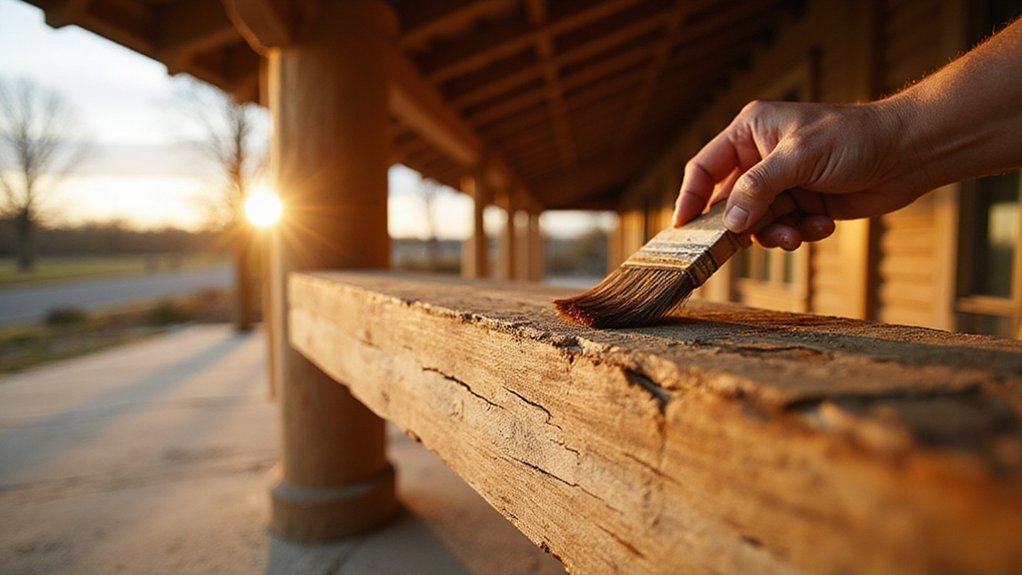
Your timber frame pavilion deserves thoughtful care to remain structurally sound. You’ll need to establish a maintenance routine that addresses seasonal inspections, moisture control, and fastener replacement—each task playing a critical role in preventing costly damage. But what specific steps should you prioritize first, and how can you identify problems before they compromise your entire structure?
Inspect Your Timber Pavilion Seasonally to Catch Damage Early
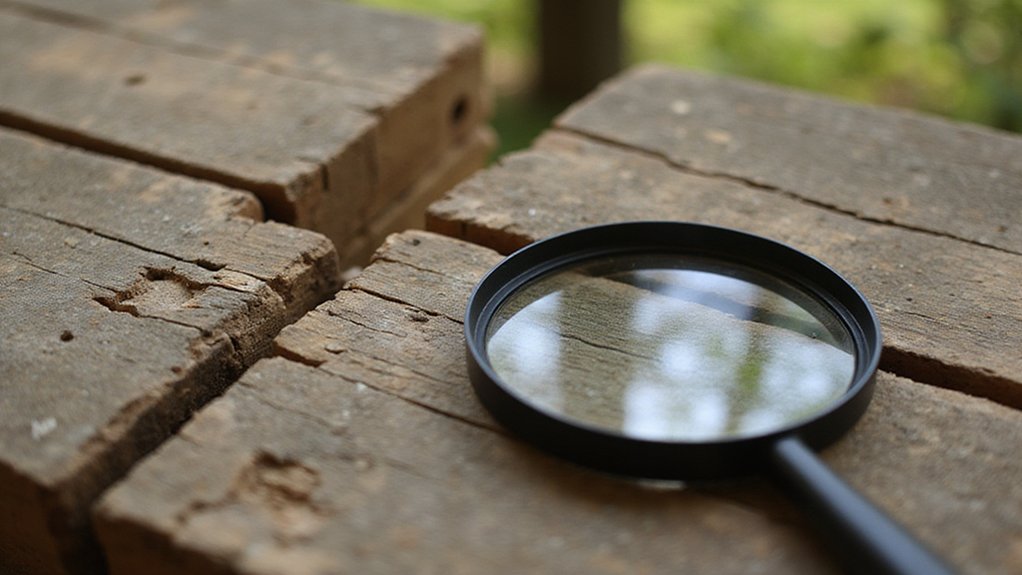
Because wood naturally expands, contracts, and deteriorates over time when exposed to changing weather conditions, you’ll want to inspect your timber pavilion at least four times per year—ideally at the start of each season—to identify problems before they become costly repairs. During each inspection, examine the wood’s surface for cracks, splits, and discoloration, which indicate moisture damage or rot. Check all joints and connections where beams meet, ensuring fasteners remain tight and secure. Look underneath the pavilion for signs of pest damage, including tunnels or droppings. Inspect the roof for missing or damaged shingles. Document your findings with photographs and notes, comparing them to previous inspections. This systematic approach helps you catch deterioration early, preserving your pavilion’s structural integrity and extending its lifespan considerably.
Remove Debris and Moisture Traps From Beams and Joints
Once you’ve identified problem areas during your seasonal inspections, you’ll need to address one of the most common causes of timber deterioration: debris and moisture accumulation in joints and beam connections. You’ll want to carefully remove leaves, dirt, and organic matter that collect in crevices where beams meet, as these materials trap moisture against the wood. Use a stiff brush or compressed air to dislodge debris from tight spaces, then wipe the areas clean with a dry cloth. Pay special attention to horizontal surfaces and recessed joints where water naturally pools. By eliminating these moisture traps, you’ll drastically reduce the risk of rot, fungal growth, and structural damage that could compromise your pavilion’s integrity and longevity.
Reseal Your Timber Frame Every 3–5 Years
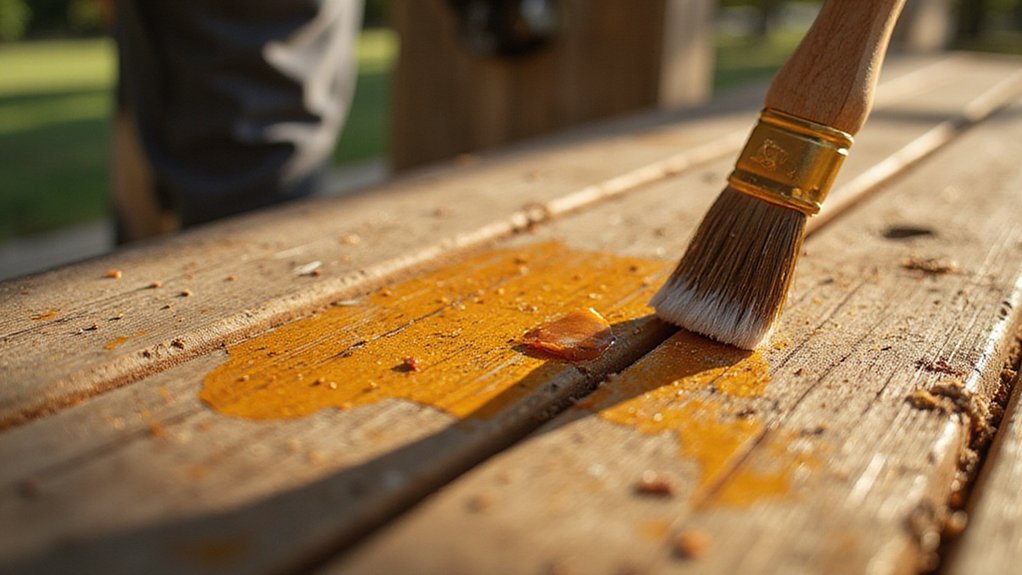
Even after you’ve removed debris and moisture traps, you’ll still need to protect your timber frame from the elements by applying a fresh coat of sealant on a regular schedule. Over time, exposure to sun, rain, and temperature changes breaks down your sealant’s protective barrier, allowing water to penetrate the wood. You should inspect your pavilion’s finish annually and plan to reseal every three to five years, depending on your climate and sun exposure. Choose a sealant designed specifically for exterior timber, and apply it during dry weather conditions when temperatures stay between fifty and eighty-five degrees Fahrenheit. Follow the manufacturer’s instructions carefully, preparing surfaces by cleaning and lightly sanding if necessary, ensuring the new sealant adheres properly and provides maximum protection.
Replace Fasteners Before Rust Spreads
While your timber frame’s wood receives protection from sealant, the metal fasteners holding your pavilion together—including bolts, screws, nails, and brackets—don’t have that same shield and will gradually corrode when exposed to moisture and oxygen. You’ll want to inspect these fasteners twice yearly, particularly after harsh weather. Look for orange or brown discoloration, which indicates rust formation. Replace corroded fasteners immediately, because rust weakens the metal and spreads to surrounding areas. Use stainless steel or galvanized replacements, which resist corrosion better than standard metal fasteners. When installing new hardware, apply a thin coat of marine-grade grease to protect against future moisture exposure. This proactive maintenance prevents structural damage and extends your pavilion’s lifespan considerably.
Stop Wood Rot and Pest Damage Before It Spreads
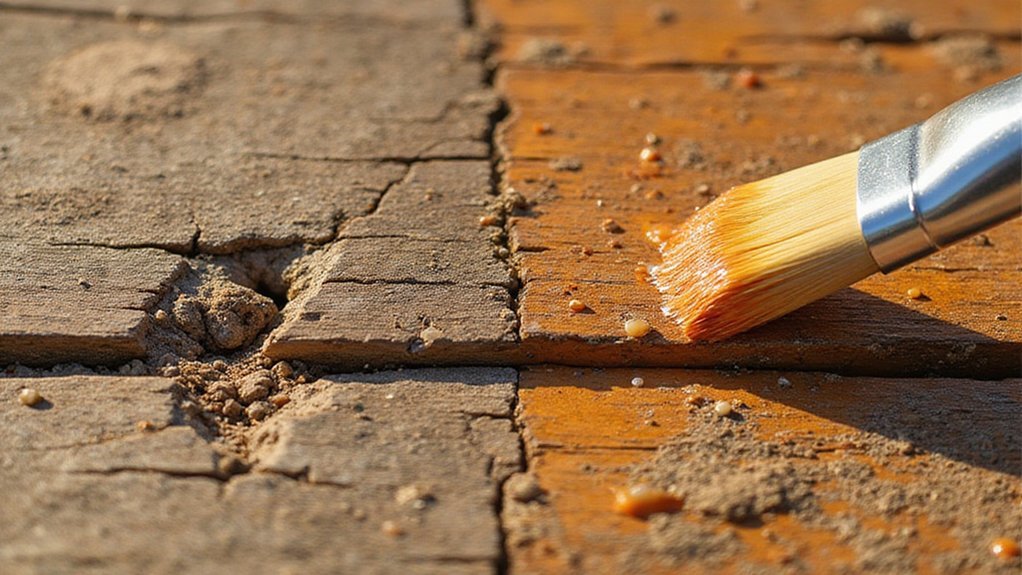
Beyond protecting your fasteners from rust, you’ll need to address threats that attack the wood itself—namely rot and insects—which can compromise your pavilion’s structural integrity far more severely than corroded hardware ever could. You should inspect wooden beams and posts regularly for soft spots, discoloration, or fungal growth that indicate rot developing. When you spot affected areas, remove the damaged wood and treat the surrounding material with fungicide to prevent spread. For pest damage, look for sawdust trails, small holes, or hollow-sounding wood that signal termite or carpenter ant activity. You’ll want to apply appropriate wood treatments or contact a pest control professional if infestation’s severe. Addressing these issues promptly prevents costly structural repairs later.
Fix Drainage Issues Around Your Pavilion’s Base
What happens when water pools around your pavilion’s foundation? Standing water accelerates wood decay, weakens soil support, and creates ideal conditions for pest infestations. You’ll need to evaluate the ground slope around your pavilion’s base and guarantee it slopes away at least six inches over ten feet. Install or repair gutters and downspouts to direct roof runoff away from the foundation. Consider adding French drains or gravel beds around the perimeter to improve water dispersal. Clear debris from drainage pathways regularly, as leaves and twigs obstruct water flow. Check for compacted soil that prevents proper drainage, and loosen it with a garden fork if necessary. By maintaining adequate drainage, you’ll protect your pavilion’s structural integrity and substantially extend its lifespan.
Check for Gaps and Movement in Your Joinery
Once you’ve addressed the water management around your pavilion’s foundation, you’ll want to examine the joints where your timber frame’s beams and posts connect, since these connection points are where your structure’s strength either holds steady or begins to fail. Look closely for visible gaps between the wood pieces, which indicate movement or settling that’s occurred over time. Use a flashlight to inspect darker areas thoroughly, and run your hand along each joint to detect separation you might otherwise miss. Check whether any wooden pegs or metal fasteners have loosened or shifted. Document any gaps larger than one-eighth inch, as these’ll require attention from a professional timber frame specialist who can assess whether reinforcement or repair is necessary.
Winterize Your Pavilion Before Freezing Temperatures Hit
As temperatures drop and freezing weather approaches, you’ll need to take specific steps to protect your timber frame pavilion from the damaging effects of ice, snow, and repeated freeze-thaw cycles that can crack wood, loosen fasteners, and force water into vulnerable joints. Start by clearing debris from the roof, gutters, and drainage areas to prevent water accumulation. Inspect all seals and caulking around joints, replacing any that’ve deteriorated, since water infiltration causes the most significant winter damage. Apply a weather-resistant sealant to exposed wood surfaces and any areas where water might collect. Guarantee proper drainage around the pavilion’s foundation so melting snow won’t pool near support posts. Finally, remove any branches hanging over your structure, as snow-laden limbs can cause serious damage during winter storms.
Protect Your Timber From Moisture and UV Damage
Beyond the winter preparations you’ve already completed, your timber frame pavilion faces two persistent threats year-round: moisture penetration and ultraviolet radiation, both of which can degrade wood quality, cause discoloration, and accelerate rot if you don’t address them proactively. You’ll want to apply a high-quality exterior wood stain or sealant every two to three years, selecting products specifically formulated to block UV rays while repelling water. When applying these protective coatings, guarantee you cover all exposed surfaces, including joints and crevices where moisture commonly collects. Additionally, improve drainage around your pavilion’s foundation by grading the surrounding soil away from the structure and installing gutters if needed. Regular inspections help you catch early damage before it becomes costly.
Replace Hardware Every 7–10 Years to Prevent Structural Weakness
While protective coatings shield your wood from external damage, the metal fasteners, brackets, and connectors holding your pavilion together require their own maintenance schedule to prevent structural problems. Every 7–10 years, you should inspect and replace hardware that’s showing signs of rust, corrosion, or weakening. Check bolts, screws, and metal joints carefully, as these components bear significant weight and stress. Corroded hardware loses its strength and can’t properly secure your timber frame, which eventually leads to sagging, misalignment, or collapse. Replace worn fasteners with galvanized or stainless steel alternatives that resist rust better. This preventative approach stops small hardware failures from becoming major structural issues that demand expensive repairs or complete replacement.
Conclusion
You’ll extend your timber pavilion’s lifespan considerably by committing to these maintenance practices, as studies show that properly maintained timber structures can last over 100 years. By inspecting seasonally, removing moisture, resealing regularly, and replacing corroded fasteners, you’re investing in your pavilion’s longevity. These preventative steps protect your structure from rot, pests, and weather damage, ensuring your outdoor space remains safe and functional for decades to come.