
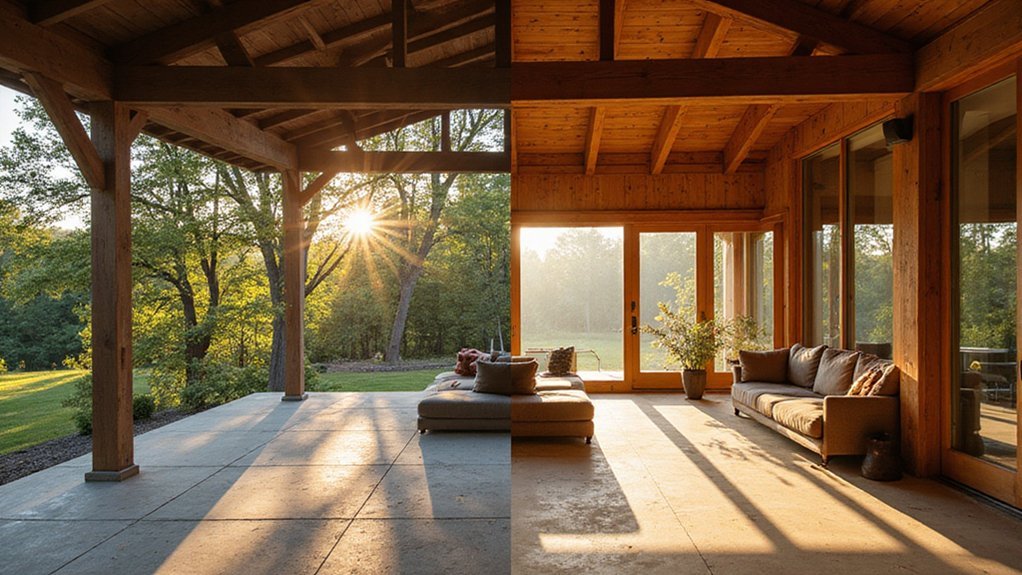
You’re facing a significant decision about your outdoor space, and the choice between an open timber frame pavilion and an enclosed one will directly impact how you use it year-round. Each design offers distinct advantages: open structures provide unobstructed views and natural airflow, while enclosed versions deliver weatherproof comfort and extended usability. Your climate, budget, and entertainment style all play pivotal roles in determining which option aligns with your lifestyle—and understanding these factors reveals which pavilion genuinely suits your needs.
Open Pavilions: Freedom and Views
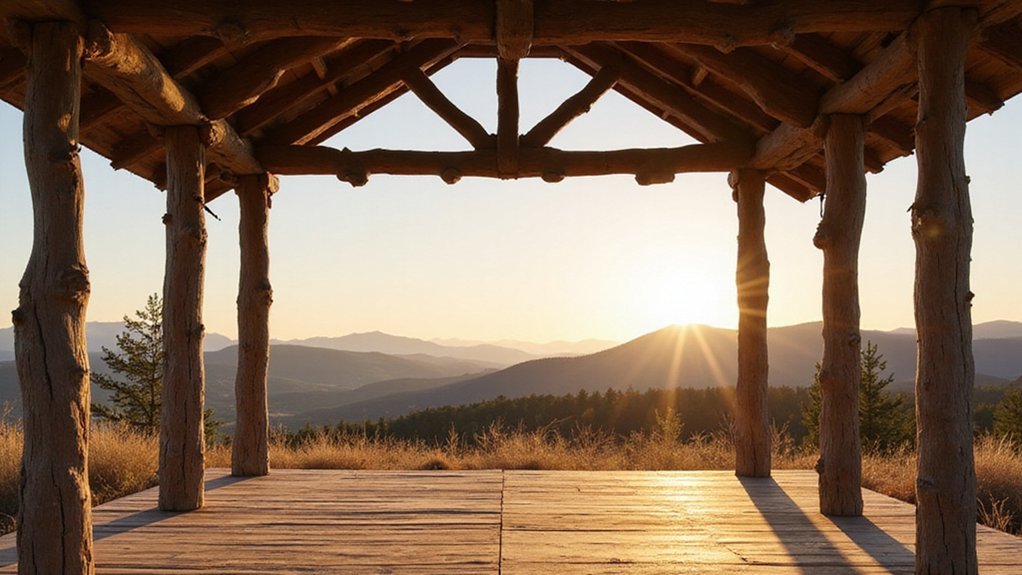
When you’re designing an open pavilion, you’ll want to prioritize the structural framework that allows unobstructed sightlines and flexible use of the interior space. Open pavilions offer you panoramic views of your surroundings, whether that’s a garden, landscape, or waterfront property. You’ll benefit from natural ventilation and light that flows freely throughout the structure, creating an airy environment that doesn’t feel confined. The timber frame itself becomes a prominent design feature, showcasing exposed beams and joinery that add visual interest. You can arrange furniture and activities however you prefer since there aren’t walls limiting your options. Additionally, open designs require less maintenance than enclosed structures because you’re not protecting interior surfaces from weather exposure.
Enclosed Pavilions: All-Weather Living
While open pavilions prioritize unobstructed views and natural airflow, enclosed pavilions take a different approach by adding walls, windows, and roofing systems that protect you from rain, wind, snow, and harsh sunlight. You’ll benefit from year-round usability, transforming your space into a functional room you can enjoy during any season or weather condition. Enclosed pavilions allow you to install heating, cooling, and lighting systems, making them suitable for extended gatherings and activities. The timber frame structure remains visible, providing aesthetic appeal while offering practical protection. You can customize windows and door placements to control ventilation and natural light, balancing openness with shelter. This design choice works well if you live in regions with unpredictable weather patterns, require climate control, or want a versatile space that accommodates various uses throughout the year.
Climate: How Your Weather Shapes Your Choice
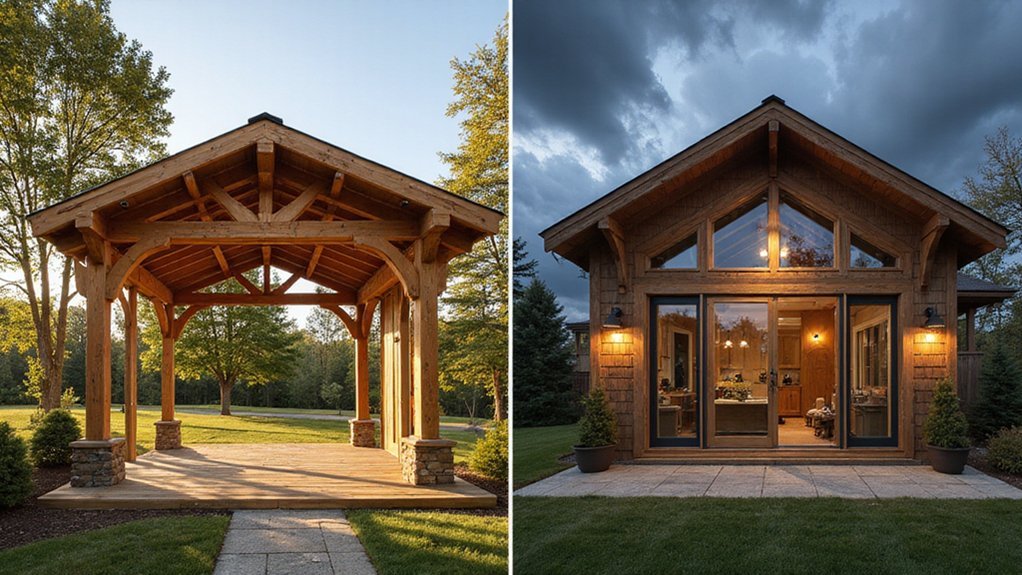
Your regional climate plays a pivotal role in determining whether you’ll benefit more from an open or enclosed timber frame pavilion, since weather patterns directly affect how often you’ll actually use your outdoor structure and what protection you’ll need. If you live in a mild climate with minimal rain and moderate temperatures, an open pavilion provides excellent ventilation and natural light without requiring expensive weatherproofing features. Conversely, if you experience frequent precipitation, intense sun, or significant temperature fluctuations, an enclosed pavilion protects your investment and extends your usable seasons considerably. Consider your area’s average rainfall, humidity levels, wind speeds, and temperature ranges when deciding. These factors determine maintenance requirements, structural durability, and whether you’ll comfortably enjoy your pavilion throughout the year, making climate analysis essential before construction begins.
Budget: What Each Style Really Costs
Because open and enclosed timber frame pavilions require vastly different construction materials and labor, understanding the cost differences between these two styles will help you make a financially sound decision that aligns with your available resources. Open pavilions typically cost less since they don’t require walls, roofing materials, or extensive weatherproofing, making them ideal for budget-conscious buyers. Enclosed pavilions demand considerably more investment due to additional framing, insulation, roofing systems, and finishing materials. You’ll also spend more on labor for enclosed structures because they’re more complex to construct. When you’re evaluating your budget, consider not just initial construction costs but also long-term maintenance expenses, as enclosed pavilions may require more upkeep to protect interior components from damage.
How You’ll Entertain: Matching Style to Activities
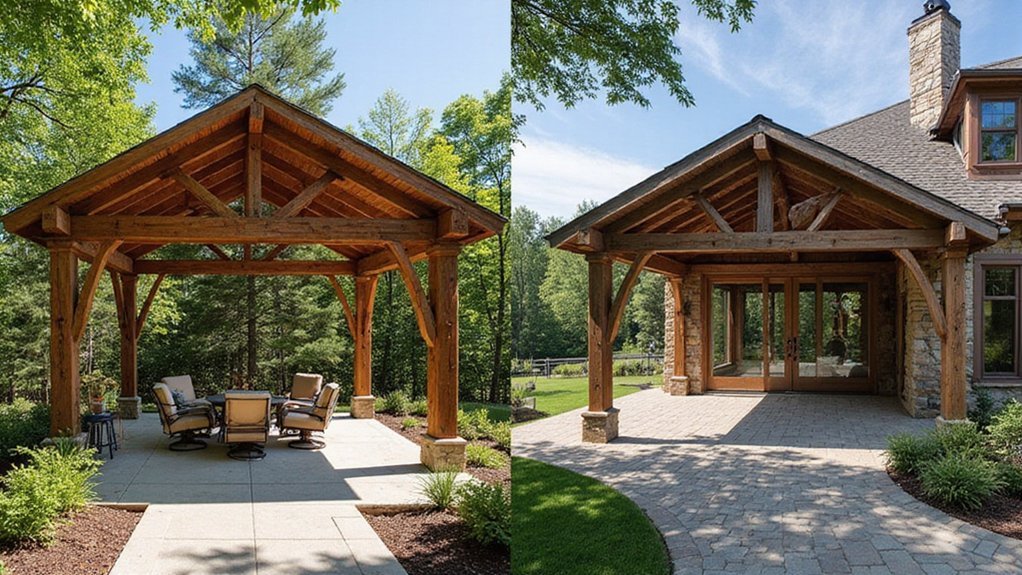
The way you plan to use your pavilion should directly influence whether you choose an open or enclosed design, since different activities benefit from different structural features and environmental protections. If you’re hosting formal dinner parties or outdoor weddings, an enclosed pavilion shields your guests from unexpected weather and insects while maintaining an elegant atmosphere. For casual family gatherings and barbecues, an open design provides better airflow and a relaxed, informal feel. If you’ll frequently host children’s activities or need protection from sun exposure, partial enclosure offers flexibility. Consider whether you’ll entertain year-round or seasonally, as this determines necessity for weatherproofing. Think about noise levels too—enclosed structures contain sound better for music events, while open designs work well for interactive games and activities requiring minimal acoustic concerns.
Year-Round Use: Heating, Cooling, and Season Extension
If you’re planning to use your timber frame pavilion beyond the typical warm months, you’ll need to ponder how to manage temperature and weather conditions throughout the year. For cooling during summer, you can install ceiling fans, open sides for natural cross-ventilation, or add retractable shade structures that block direct sunlight. Winter heating options include portable heaters, fire pits, or permanent heating systems like radiant floor heating. To extend your usable seasons, consider installing removable or permanent panels on open sides, which provide weather protection while maintaining flexibility. Polycarbonate panels allow light transmission while insulating against cold, whereas solid panels offer maximum protection. Strategic placement of these elements, combined with proper drainage systems, enables you’ll enjoy your pavilion comfortably throughout all seasons while preserving its timber frame aesthetics.
Bugs, Rain, and Snow: What You’re Trading Off
While adding panels and heating systems helps you extend your pavilion’s usable seasons, you’re also accepting certain trade-offs that come with open-sided structures. Insects can enter freely during warmer months, requiring you to use screens or bug spray for comfort. Rain penetrates through open sides, limiting usability during storms unless you install protective coverings. Snow accumulation presents another challenge, as drifting snow can settle inside your structure, potentially damaging furniture or equipment stored there. Additionally, you’ll need to maintain these protective elements regularly, which demands time and resources. Understanding these limitations helps you decide whether an open pavilion aligns with your lifestyle, or whether enclosed options better suit your needs and climate conditions.
Maintenance: Ongoing Work and Durability
Because timber frame pavilions are exposed to weather year-round, you’ll need to commit to regular maintenance tasks that keep your structure safe and looking good for decades. You should inspect your wood beams annually for signs of rot, insect damage, or splitting, addressing problems immediately before they spread. Staining and sealing the timber every three to five years protects against moisture penetration and UV damage, extending your pavilion’s lifespan substantially. You’ll also need to check fasteners, bolts, and connections regularly, tightening them as wood naturally shifts and settles. Clearing debris from the roof and gutters prevents water accumulation and potential structural weakening. While this ongoing work requires dedication and time investment, proper maintenance guarantees your timber frame pavilion remains structurally sound and visually appealing for many years.
Will It Look Right on Your Property?
How does a timber frame pavilion fit into your existing landscape and home design? You’ll want to examine your property’s architectural style, whether it’s modern, traditional, or rustic, and select a pavilion that complements these elements. Evaluate your yard’s size, terrain, and existing vegetation to determine the best placement location. The pavilion’s proportions should balance with your home’s scale and not overwhelm your outdoor space. Contemplate sight lines from your house and neighboring properties, as the structure will be visible year-round. Think about how the pavilion’s material color and finish coordinate with your home’s exterior colors and materials. You’ll also want to assess how the structure functions within your landscape’s flow and whether it enhances your property’s overall aesthetic appeal and value.
Your Pavilion Decision: The Side-by-Side Comparison
After you’ve assessed your property’s style and determined where you’d like your pavilion to go, you’re ready to compare the different timber frame options available to you. Start by listing what you’ll use your space for—whether that’s entertaining, storage, or relaxation. Next, consider weather protection needs in your climate; open pavilions offer airflow but limited shelter, while enclosed versions provide full protection. Evaluate maintenance requirements, as enclosed structures need more upkeep. Compare costs, since enclosed pavilions typically cost more initially but offer year-round usability. Think about your budget for both construction and long-term maintenance. Finally, review local building codes and regulations that might affect your choice. This systematic comparison guarantees you’ll select the pavilion that truly matches your lifestyle and property needs.
Conclusion
You’ll find that choosing between open and enclosed pavilions demands you weigh climate severity against your entertainment frequency, budget constraints against long-term durability needs, and aesthetic preferences against practical functionality. Your decision fundamentally determines whether you’re building a seasonal retreat that demands minimal maintenance or an all-weather structure requiring substantial investment. Honestly evaluating your region’s weather patterns, annual usage frequency, and financial capacity guarantees you’ll construct a pavilion that genuinely serves your lifestyle for decades.