
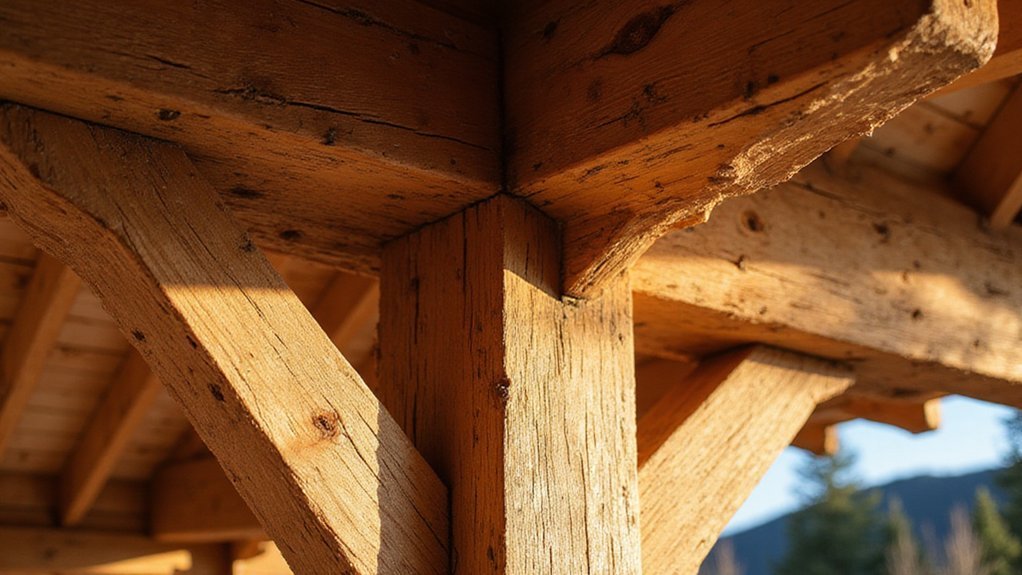
When you build a timber frame pavilion, your local climate becomes your primary design constraint. The moisture levels, temperature swings, and sun intensity where you live directly determine which wood species will survive, how your joints must flex, and what protective finishes you’ll need. Understanding these climate-specific demands means the difference between a pavilion that lasts decades and one that warps, rots, or splinters within years. Your first step is identifying which climate challenges you’re actually facing.
How Climate Shapes Timber Frame Pavilion Longevity
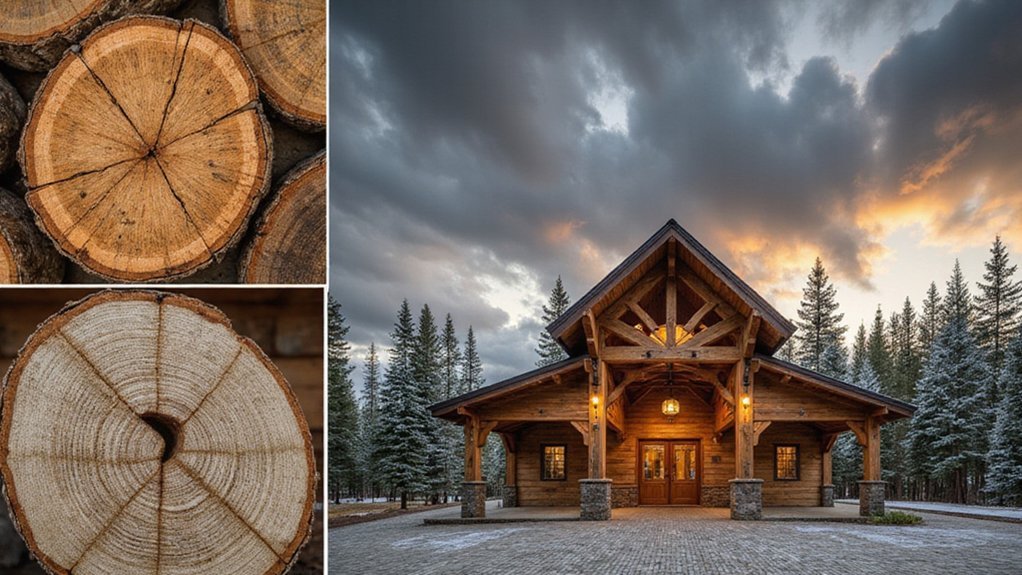
Because wood is a natural material that responds directly to environmental conditions, the climate where you build your timber frame pavilion will greatly impact how long it lasts and how well it performs over time. In humid climates, moisture penetrates the wood’s fibers, causing swelling, warping, and rot that’ll compromise your pavilion’s structural integrity. Conversely, dry climates create different challenges—wood shrinks excessively, leading to cracks and joint separation. Temperature fluctuations stress the wood through constant expansion and contraction cycles. Regions experiencing freeze-thaw cycles pose additional risks, as trapped moisture expands when frozen, splitting the timber. UV radiation from intense sunlight degrades wood’s surface and accelerates weathering. Understanding your local climate patterns allows you to select appropriate wood species, apply protective finishes, and design proper drainage systems that’ll maximize your pavilion’s durability and longevity.
Design Joints That Flex With Humidity Changes
Wood constantly shifts as moisture levels rise and fall with the seasons, so you’ll need to design joints that accommodate this natural movement rather than resist it. Traditional mortise-and-tenon joints work well because they allow wood to expand and contract along the grain while maintaining structural integrity. You should orient your joints to permit vertical movement, which prevents warping and cracking that occurs when wood’s growth is restricted. Sliding dovetails and loose tenons provide flexibility that rigid connections can’t offer. Consider using elongated bolt holes instead of standard ones, allowing fasteners to move with wood expansion. When you design with this intentional flexibility, you’re working with wood’s inherent properties rather than against them, resulting in stronger, longer-lasting pavilions that withstand seasonal humidity changes without developing damaging stress points.
Pick Wood Species for Wet and Subtropical Climates
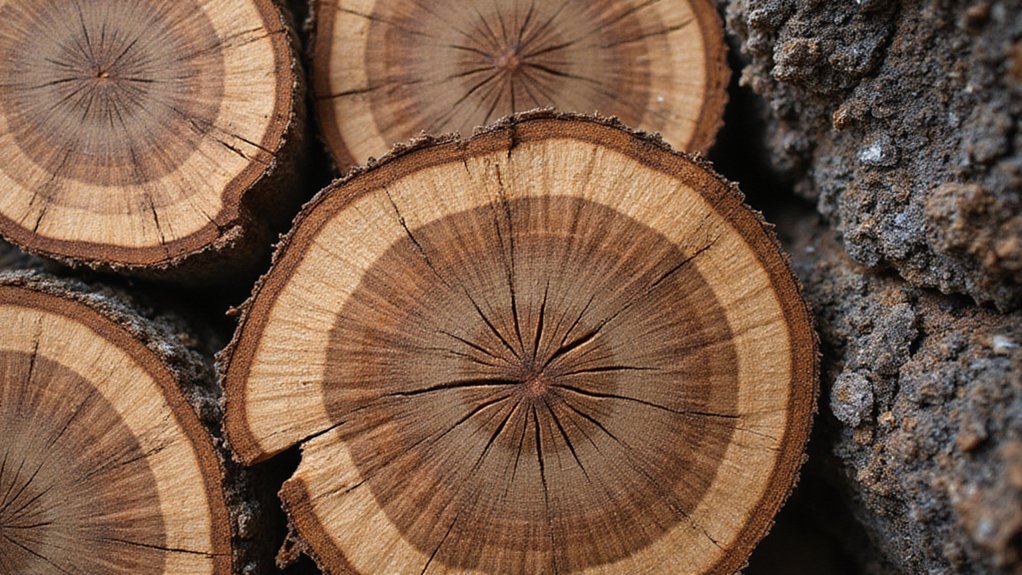
Once you’ve designed joints that’ll move with seasonal humidity shifts, you’ll need to select wood species that can actually handle the wet, warm conditions found in subtropical regions. Pressure-treated lumber offers excellent resistance to rot and insect damage, making it ideal for pavilions exposed to constant moisture. Alternatively, naturally durable hardwoods like ipe, cumaru, or teak contain oils and compounds that prevent decay without chemical treatment. These dense tropical woods withstand repeated wet-dry cycles that’d compromise softer species. Cedar and redwood provide moderate durability at lower costs, though they’ll require regular maintenance in subtropical climates. When selecting your wood, prioritize species with tight grain structures and high density ratings, as these characteristics directly correlate with longevity in humid environments where fungal growth and wood-eating insects thrive.
Choose Woods That Resist UV Damage in Deserts
Desert pavilions face a distinctly different challenge than their subtropical counterparts—intense, relentless ultraviolet radiation that’ll break down wood fibers, fade finishes, and create surface checking (small cracks) if you don’t select appropriate materials. You’ll want to choose naturally durable woods like mesquite, ironwood, or ipe, which contain compounds that resist UV degradation better than softer species. These dense hardwoods also withstand extreme temperature fluctuations without warping excessively. Additionally, you should apply high-quality UV-protective finishes, including exterior-grade polyurethane or specialized wood sealers formulated for desert conditions. Consider light-colored finishes that reflect rather than absorb solar heat, reducing surface temperature stress. Regular maintenance, including reapplying protective coatings every two to three years, guarantees your pavilion structure remains structurally sound and visually appealing throughout its lifespan.
Plan for Seasonal Wood Movement in Temperature Swings
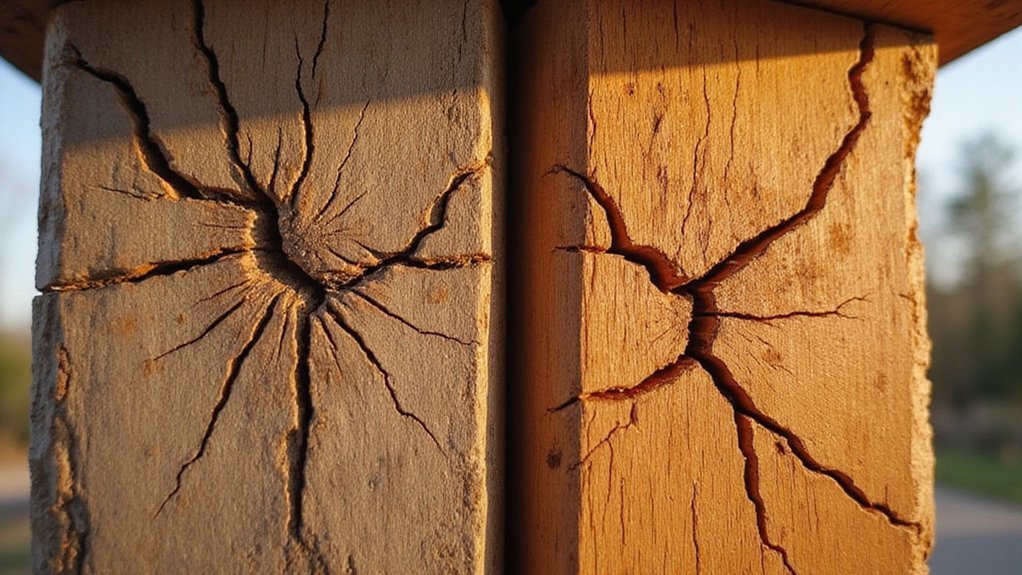
How much can timber actually expand and contract throughout the year? Wood moves drastically with temperature and humidity changes, expanding when it’s warm and contracting when it’s cold. You’ll need to account for this movement when designing your pavilion’s joints and connections. Install expansion joints between wooden components to allow for natural shifting without causing cracks or structural stress. Use construction methods like mortise-and-tenon joints or slotted fastening systems that accommodate wood movement while maintaining structural integrity. Plan your beam spacing and post placement to minimize stress points during seasonal fluctuations. Leaving small gaps between boards and using flexible fasteners rather than rigid ones will help your pavilion withstand years of temperature swings without damage or warping.
Roof Pitch and Overhangs: Your First Weather Defense
Since you’ve already planned for wood movement in your pavilion’s joints and connections, you’ll now want to focus on directing water away from your structure through proper roof design, which starts with choosing an appropriate roof pitch and installing adequate overhangs. A steeper roof pitch, typically between 6:12 and 12:12, allows rainwater to shed quickly rather than pooling on the surface where it can seep into wood fibers. You’ll also want overhangs extending at least 24 inches beyond your walls, protecting the timber frame’s sides and foundation from direct exposure to rain and snow. This combination of pitch and overhang creates your first line of defense against moisture damage, rot, and structural deterioration that climate conditions inevitably bring.
Finishes That Hold Up in Your Climate
Everything you’ve done to protect your timber frame through proper roof design and structural planning will only work effectively if you’ve also chosen the right protective finishes for your wood surfaces, since the coating you apply directly determines how well your pavilion resists moisture, UV rays, and temperature fluctuations in your specific climate. You’ll need to select finishes based on your region’s conditions: humid climates require moisture-resistant sealers that prevent rot and mold growth, while arid regions demand UV-protective stains that combat sun damage and wood bleaching. Cold climates need flexible finishes that expand and contract with seasonal temperature changes without cracking. Research products specifically formulated for your local weather patterns, and plan to reapply finishes every two to five years depending on exposure and climate severity.
Block Ground Moisture at the Foundation
While you’re protecting your timber frame from above with proper roofing and finishes, you’ll also need to address moisture coming up from below, since ground water and soil moisture pose just as serious a threat to your pavilion’s wooden posts and structural integrity. Install a moisture barrier, such as gravel or a vapor-permeable membrane, directly beneath your foundation to redirect water away from wood contacts. You should elevate wooden posts at least eight inches above grade level, ensuring adequate airflow underneath. Create proper drainage around your pavilion by sloping the ground away from the structure, and consider installing a French drain if your site has poor drainage or sits in a low area. These preventative measures will substantially extend your timber frame’s lifespan.
Maintenance Schedules That Match Your Climate
Once you’ve established a solid foundation and protective systems for your timber frame pavilion, you’ll need to develop a maintenance schedule that aligns with your specific climate conditions, since different regions experience varying levels of moisture, temperature fluctuations, UV exposure, and seasonal weather patterns that directly affect wood deterioration rates. In humid climates, you should inspect your structure quarterly for mold, mildew, and rot, applying protective sealants every two to three years. Dry climates require less frequent sealing but demand attention to checking for wood checking and splitting caused by rapid moisture loss. Cold regions necessitate spring and fall inspections to address freeze-thaw damage, while coastal areas require more aggressive maintenance due to salt spray corrosion of fasteners and accelerated wood degradation.
Timber Frame Pavilion Designs That Thrive in Your Region
Regional design adaptation represents the critical bridge between your maintenance schedule and long-term pavilion success, since the most resilient structures aren’t simply well-maintained versions of generic designs but rather buildings intentionally shaped to complement their local environmental conditions. Your region’s specific climate demands particular structural approaches that optimize performance and durability. In humid areas, you’ll want designs featuring enhanced ventilation and elevated foundations that prevent moisture accumulation beneath your pavilion. Conversely, in arid regions, your design should incorporate shade structures and minimal water-trapping details. Mountain climates require steeper roof pitches for snow load management, while coastal environments demand corrosion-resistant construction methods. By tailoring your pavilion’s design specifically to your regional characteristics, you’re fundamentally creating a structure that works harmoniously with nature rather than against it, markedly reducing maintenance demands and extending your investment’s lifespan considerably.
Conclusion
Your timber frame pavilion’s success hinges on matching your design and wood choices to your climate’s demands, like a ship’s hull adapting to different seas. By understanding your region’s moisture patterns, UV intensity, and temperature swings, you’ll craft a structure that weathers the years gracefully. Implement flexible joints, select appropriate wood species, and maintain protective finishes consistently to guarantee your pavilion stands strong for decades.