
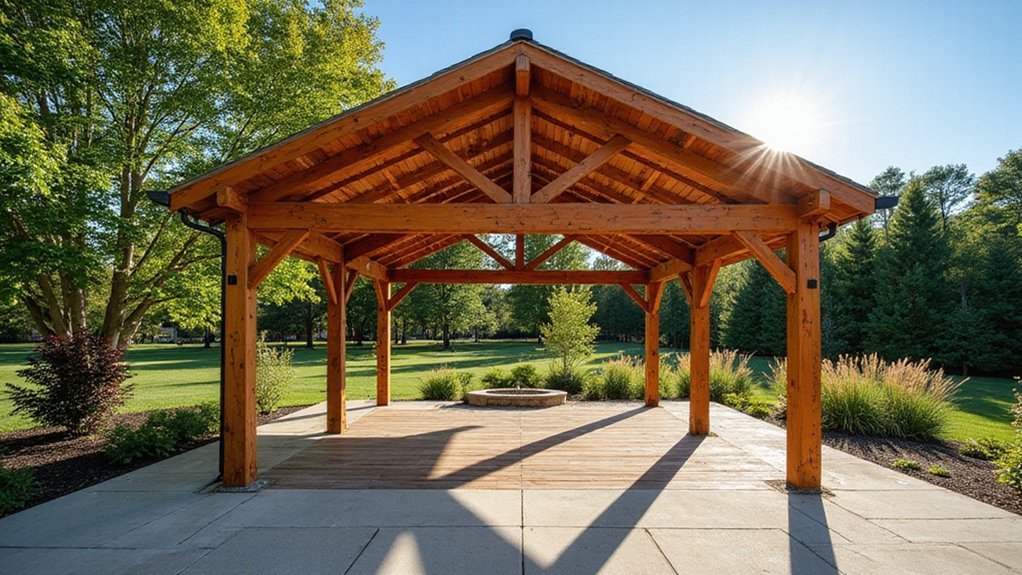
Research shows that homeowners recoup 50-75% of pavilion costs through increased sale prices, yet this figure doesn’t tell the complete story. You’re probably wondering whether building one makes financial sense for your specific property, location, and long-term plans. The answer depends on several critical factors—from local market conditions to construction quality to how well the pavilion fits your home’s overall design. Understanding these variables will help you make an informed decision.
Does Your Local Market Actually Reward Outdoor Structures?
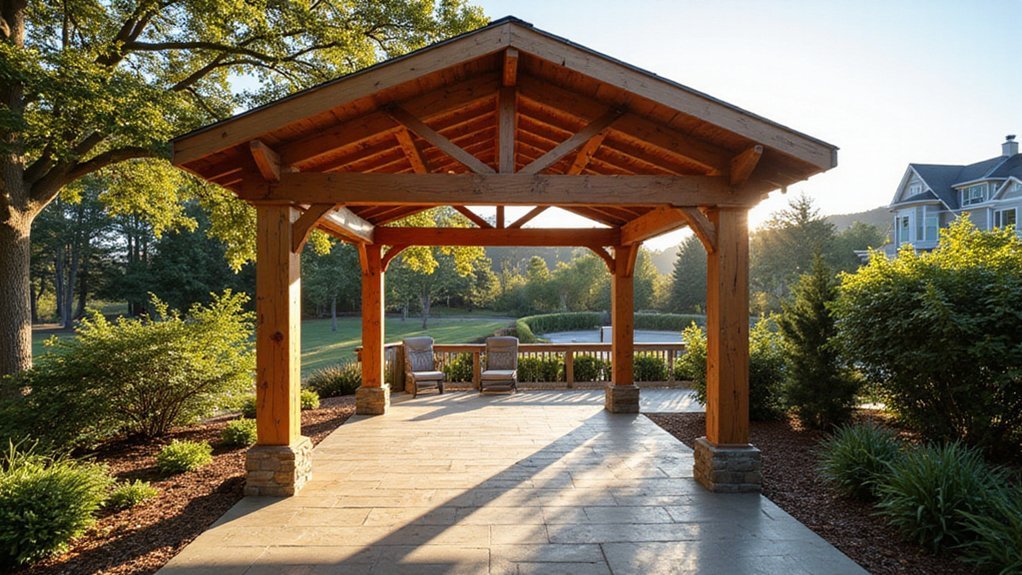
How do you know whether adding a timber frame pavilion will actually increase your property’s value in your specific neighborhood? You’ll need to research your local real estate market carefully. Start by examining recently sold homes in your area that have outdoor structures, comparing their sale prices to similar homes without them. Talk with local real estate agents who understand market trends in your neighborhood. They can tell you whether buyers in your region actually value outdoor pavilions or if they’re considered unnecessary additions. Check online property listings to see which homes sell faster and for higher prices. Some markets reward outdoor living spaces generously, while others don’t prioritize them as much. Understanding your local market’s preferences before investing will help you make a financially sound decision.
What Buyers Really Notice: The First-Impression Factor
Because potential buyers form their initial opinions within the first few seconds of viewing your property, the visual impact of a timber frame pavilion can greatly influence their perception of your home’s overall appeal and value. When buyers drive up to your home, they’re immediately evaluating the landscape and outdoor features, and a well-constructed pavilion signals quality craftsmanship and thoughtful property investment. The natural wood aesthetic creates warmth and elegance that catches attention, suggesting that you’ve maintained your property with care. A pavilion also demonstrates functional outdoor living space, which today’s buyers actively seek. This positive first impression establishes confidence in your property’s condition before buyers even enter your home, potentially affecting their willingness to pay premium prices.
What ROI Can You Realistically Expect From a Pavilion?
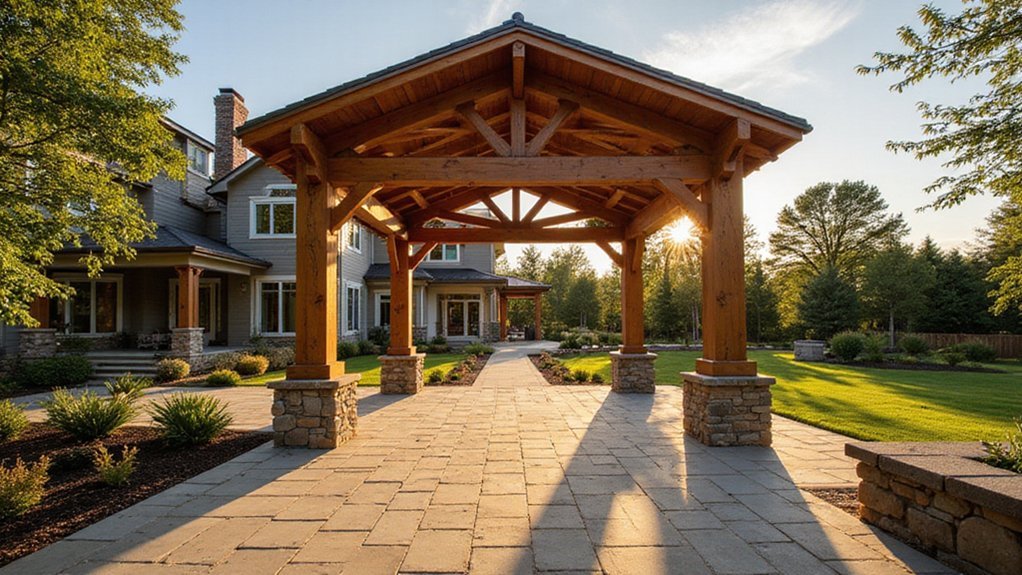
While that strong first impression you’ve created with your timber frame pavilion definitely helps attract buyers, you’ll want to understand the actual financial return on your investment before committing to the project. Most homeowners recover between 50 to 75 percent of their pavilion construction costs when selling their property, though this percentage varies based on your location, the pavilion’s quality, and your local real estate market conditions. High-end timber structures in desirable neighborhoods typically perform better financially than basic designs in less competitive markets. You should research comparable sales in your area, consult with a real estate agent about specific value increases, and calculate your total investment carefully. This thorough analysis guarantees you’re making a financially sound decision that aligns with your long-term property goals.
Build Quality: Why Construction Standards Determine Resale Value
Every detail in your timber frame pavilion’s construction directly impacts how much value it’ll add to your property when you’re ready to sell. When builders use superior materials and follow strict building codes, they’re creating a structure that’ll last decades without major repairs, which buyers recognize and reward with higher offers. Poor construction standards, conversely, signal hidden problems that’ll require expensive fixes, immediately reducing your property’s appeal. Professional inspectors examine foundations, joinery, wood treatments, and weatherproofing during appraisals, so shortcuts in these areas cost you considerably. You’re fundamentally investing in credibility when you prioritize quality construction—proper permits, licensed contractors, and verified workmanship create documentation that reassures buyers. This transparency transforms your pavilion from a liability into a genuine asset that justifiably increases your home’s market value and sale price.
How Size, Placement, and Design Affect Your Home’s Appeal
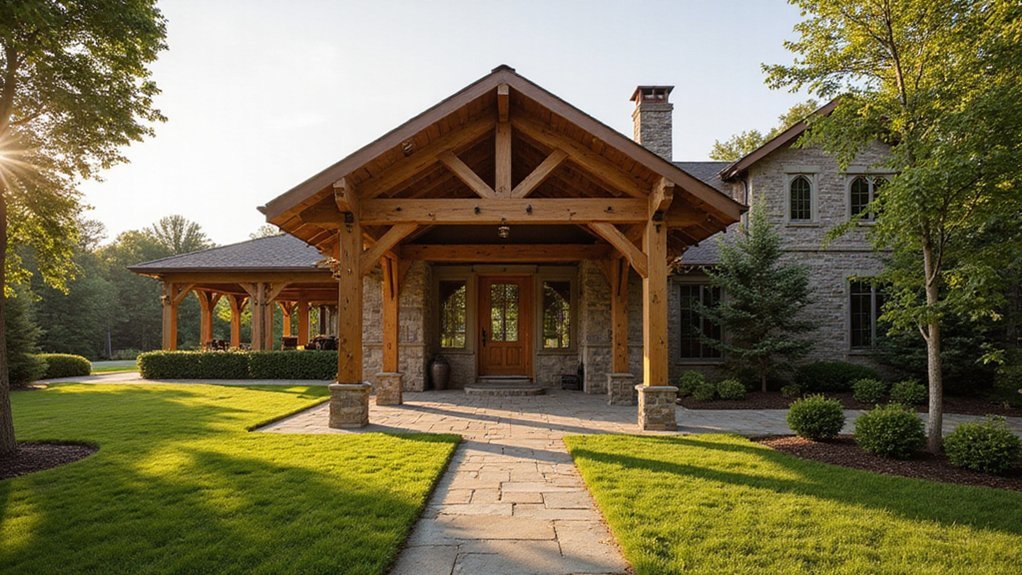
Your timber frame pavilion’s dimensions, location on your property, and architectural style work together to determine whether it’ll enhance or detract from your home’s overall appeal and market value. A pavilion that’s proportional to your home’s size creates visual balance, while an oversized structure can overwhelm your landscape. Placement matters profoundly—positioning it where it’s visible from the street and complements your home’s architectural design increases curb appeal. Consider how the pavilion’s style aligns with your home’s existing aesthetic; a modern pavilion next to a traditional house may clash, reducing appeal. Strategic positioning near landscaping features or entertaining areas maximizes functionality and perceived value. When size, placement, and design harmonize thoughtfully, you’ll create an inviting outdoor space that attracts potential buyers and justifies premium pricing.
Pavilions vs. Decks, Patios, and Pools: Which Adds More Value?
Several outdoor structures can enhance your property’s value, but they don’t all deliver the same return on investment. Decks typically recover about 75-80% of their construction costs, while patios return approximately 50-70%, depending on materials and maintenance. Pools, despite their popularity, often recoup only 50-60% of expenses, partly because they require ongoing maintenance and appeal to a narrower buyer pool. Timber frame pavilions, however, occupy a middle ground, recovering roughly 70-75% of costs. They’re more durable than decks, require less maintenance than pools, and offer year-round functionality that patios can’t match. When considering your investment, factor in longevity, maintenance demands, and local market preferences to determine which structure best suits your property and financial goals.
The Permits, Rules, and Hidden Costs Nobody Mentions
Most people underestimate the expenses that come before and after building a timber frame pavilion, which can substantially impact your total investment and timeline. You’ll need building permits from your local municipality, which require detailed plans and inspection fees ranging from hundreds to thousands of dollars. Zoning regulations may restrict pavilion size, height, and setback distances from property lines. Additional costs include foundation work, electrical connections if you’re adding lighting, and potential homeowner association approval fees. Some municipalities demand environmental assessments or require you to hire licensed engineers for structural certification. Post-construction, you’re responsible for ongoing maintenance, annual inspections in certain areas, and possible property tax reassessment once you’ve added a permanent structure to your land.
When a Pavilion Actually Hurts Property Value
While permits and hidden costs can strain your budget during construction, a poorly planned pavilion can actually decrease your property’s market value instead of increasing it. You’ll hurt your home’s appeal if you build a pavilion that doesn’t match your house’s style, is oversized for your lot, or blocks desirable views. Prospective buyers may view a cheaply constructed structure as a liability requiring expensive repairs rather than an asset. Additionally, you’ll face problems if your pavilion violates local zoning restrictions, encroaches on setback requirements, or creates drainage issues that damage neighboring properties. A pavilion positioned awkwardly in your yard can make outdoor spaces feel cramped and cluttered. Before building, carefully consider how your pavilion integrates with your property’s overall design and your neighborhood’s standards.
Cost-Benefit Analysis: Will Your Investment Pay Off at Resale?
Before you commit to building a timber frame pavilion, you’ll want to calculate whether your investment will actually return money when you sell your home, and this requires examining both the construction costs and the potential increase in property value. Start by determining your total project expenses, including materials, labor, and permits. Next, research comparable homes in your area that have outdoor structures, noting how much their sale prices increased. Generally, you can expect to recover 50-70% of your pavilion investment through resale value. Compare this recovery rate against your total spending to determine your net gain or loss. If local market data shows strong buyer interest in outdoor entertainment spaces, your investment becomes more favorable, making the pavilion a financially sound decision.
Is a Timber Frame Pavilion Right for Your Property?
Now that you’ve evaluated whether a timber frame pavilion makes financial sense, you’ll need to assess whether your specific property is actually suitable for this type of structure. Consider your available space, including yard dimensions and proximity to your home, since pavilions require adequate clearance for both construction and future use. Examine your soil conditions and drainage patterns, as poor drainage can compromise the structure’s foundation and longevity. Review local zoning regulations and building codes that may restrict pavilion placement, size, or design elements. Evaluate your property’s aesthetic character to guarantee the pavilion complements existing architectural features. Additionally, assess your climate conditions, including wind exposure and precipitation patterns, since these factors influence structural durability and maintenance requirements. Finally, consider your long-term plans for the property, verifying the pavilion aligns with your future goals.
Conclusion
You’ll find that a timber frame pavilion can boost your property’s value, with homeowners recouping 50-75% of construction costs through resale prices. Your success depends on local market demand, construction quality, and how well the pavilion fits your property’s overall design. Before you build, research your area’s market conditions, understand permit requirements, and honestly assess whether the investment aligns with your long-term goals and your home’s appeal.