
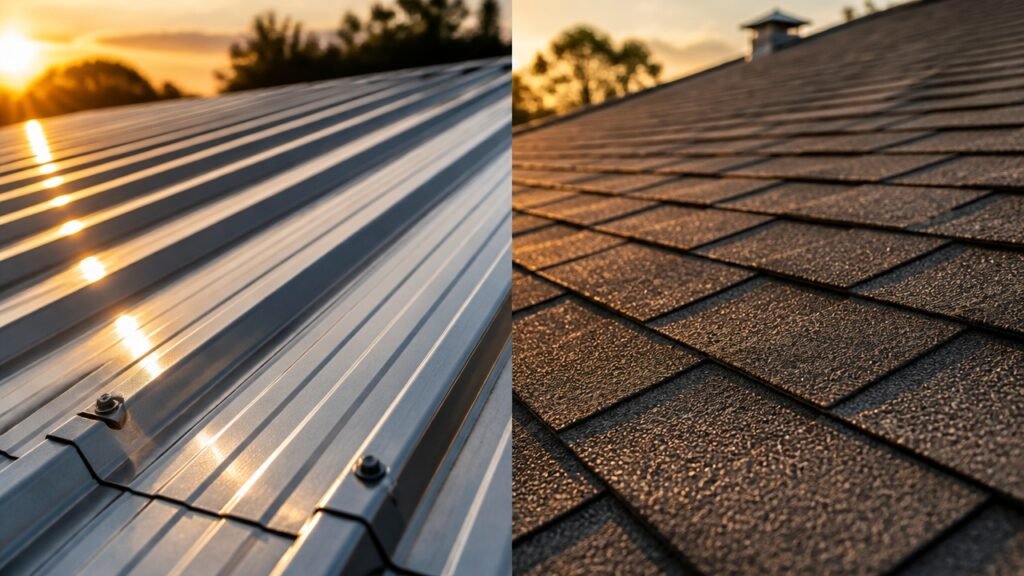
Choosing a new roof can feel like a big decision.
But it really comes down to a few practical differences that matter most for your home.
Metal roofs and asphalt shingles each bring their own strengths to the table.
Metal lasts 40 to 70 years with little upkeep, while shingles need replacing every 15 to 25 years.
That gap alone shapes how you think about long-term value.
Then there is how they handle rough weather.
Storm resilience varies quite a bit between the two.
Understanding these three factors helps you decide what works for your climate and your budget.
How Long Do Metal Roofs vs. Shingles Last?
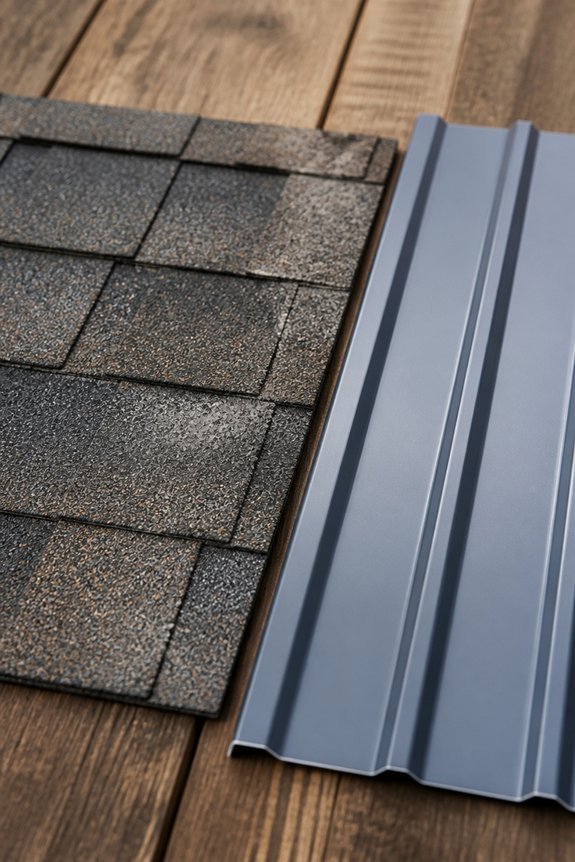
How Long a Roof Lasts Depends on Materials
Metal roofs and asphalt shingles age very differently. Metal typically lasts 40 to 70 years. Shingles usually hold up for 15 to 25 years.
Your climate, installation quality, and maintenance habits all affect longevity. So does exposure to severe weather.
Why Metal Outlasts Shingles
Metal resists rust, wind damage, and flying debris better than shingles. It holds its shape through storms that tear off asphalt.
Shingles break down faster from sun exposure. UV rays, temperature swings, and moisture all speed up deterioration. You will notice curling, cracking, and granule loss over time.
Maintenance and Location Matter
Regular inspections catch small problems early. Quick repairs extend life for both roof types.
Where you live changes everything. Coastal salt air corrodes metal faster. Intense desert sun bakes shingles brittle. Match your material to your environment for the best results.
Metal Roof vs. Shingles: What’s the Real Cost?
Metal Roof vs. Shingles: What’s the Real Cost?
Upfront costs differ sharply between these two options. Metal roofs typically run $8,000 to $15,000 installed. Asphalt shingles usually cost $3,000 to $7,000.
Longevity changes the math entirely. Metal roofs last 40 to 70 years with little upkeep. Asphalt shingles survive 15 to 25 years and need regular repairs.
Over 50 years, metal often wins on total cost. You replace shingles two or three times in that span.
Insurance savings help too. Many companies discount metal roofs by 10 to 20 percent annually. Those savings chip away at the higher price tag year after year.
Which Roof Handles Storms Better?
Metal and asphalt roofs handle storms very differently. Metal stands up better to high winds, hail, and heavy rain. It sheds water fast, so pooling and leaks are less likely. Hail rarely punctures metal, thanks to its strength.
Asphalt shingles face more risks in severe weather. Winds over 60 mph can crack, lift, or tear them. Hail creates dents and weak spots where water seeps in. Flying debris also causes more damage to shingles than to metal.
For homes in hurricane or tornado zones, metal roofing provides stronger protection. Asphalt shingles usually need repairs after major storms.
Frequently Asked Questions
Are Metal Roofs Noisier Than Shingles During Rain or Hail Storms?
Metal roofs can produce louder noise during rain and hail storms compared to traditional shingles. However, proper insulation and underlayment greatly reduce this sound transmission, making the noise levels comparable to shingled roofs.
How Do Metal Roofs and Shingles Differ in Environmental Impact and Recyclability?
Metal roofs last 50+ years versus shingles’ 20-25, like comparing a durable oak tree to annual wildflowers. Metal’s recyclability makes it environmentally superior, while asphalt shingles typically end in landfills, creating significant waste accumulation over time.
Which Roofing Material Offers Better Energy Efficiency and Insulation Properties?
Metal roofs demonstrate superior energy efficiency, reflecting solar radiation and reducing cooling costs by up to 25 percent. Shingles provide moderate insulation but require additional underlayment for ideal thermal performance. Metal’s conductivity makes it the more efficient choice overall.
Can You Install Metal Roofing Over Existing Asphalt Shingles?
Metal roofing can be installed over existing asphalt shingles, though experts typically recommend removing the old shingles first. Proper underlayment and ventilation are essential when installing directly over shingles to guarantee longevity and performance.
Do Metal Roofs Require More Specialized Maintenance Than Traditional Shingle Roofs?
Like a finely tuned instrument requiring a conductor’s touch, metal roofs demand more specialized care than their shingle counterparts. They need professional inspections, sealant maintenance, and fastener checks to prevent corrosion and leaks effectively.
Conclusion
Metal roofs outlast shingles by decades, yet homeowners still choose the shorter-lived option for initial savings. Storm damage proves metal’s superiority, resisting hail and wind where shingles fail repeatedly. Maintenance needs favor metal, requiring fewer inspections and repairs over time. The irony remains: the more expensive investment costs less overall, while the economical choice demands constant attention and frequent replacement throughout a homeowner’s tenure.