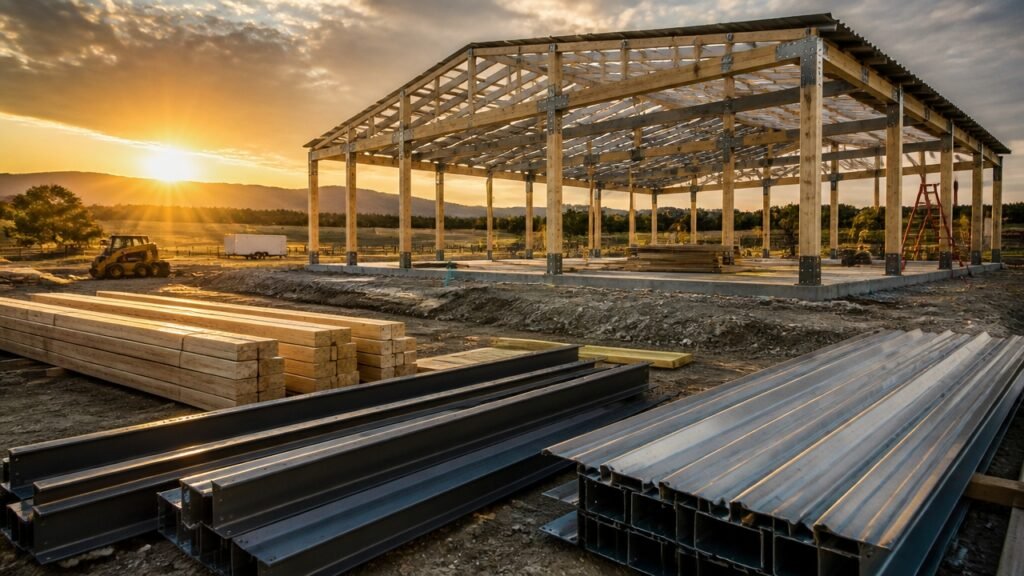
Planning a pole barn feels like a big undertaking. But breaking it down into manageable pieces makes the process much easier.
Size is the first thing most people consider. Interestingly, larger structures often cost less per square foot. That counterintuitive detail can reshape your entire approach.
Materials and location matter just as much. Metal roofing runs differently than asphalt. Labor rates swing depending on where you build. Site preparation needs vary too.
Think about how you will actually use the space. Custom features like insulation and interior upgrades add up quickly.
Understanding these five factors helps you spot where to splurge and where to save.
Size and Square Footage
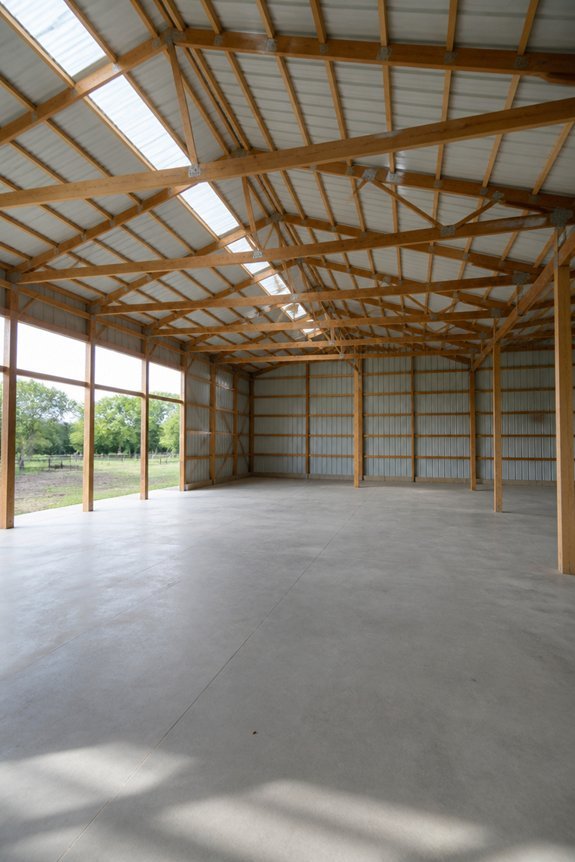
Pole barn costs rise directly with building size. Understanding this relationship helps you plan your budget wisely.
A 40-by-60-foot structure costs far less than a 60-by-100-foot building. Typical residential pole barns fall between 1,200 and 3,600 square feet. This range affects how much lumber, roofing, and siding you need.
Larger buildings need more materials and labor. However, the price per square foot usually drops as projects grow. Your total bill still climbs, but you get more value for each foot.
Land size and purpose guide your decision. Agricultural buildings often need 4,000 to 6,000 square feet. Storage spaces work well with less room.
Measure carefully before you build. Accurate calculations prevent surprises and ensure you have enough space.
Materials and Roofing Choices
Material selection shapes pole barn expenses and long-term performance. You have several roofing options to consider.
Metal roofing runs $8 to $15 per square foot. It lasts 40 to 70 years with minimal upkeep. Asphalt shingles cost less upfront at $3 to $8 per square foot. However, you’ll need to replace them every 15 to 20 years.
Standing seam metal offers the best weather resistance. Expect to pay $10 to $18 per square foot for this premium option. Siding materials like metal or wood also affect your total budget. Structural components including posts, beams, and trusses represent your largest material investments. These elements deserve careful attention during budget planning.
Location and Site Preparation
Site preparation and location shape both your costs and your barn’s long-term strength. Where you build affects labor rates, material access, and local codes. Soil quality determines how deep your foundation must go and what drainage you’ll need. Poor drainage means extra excavation work.
Sloped land calls for grading and leveling before construction begins. Hard-to-reach sites drive up equipment delivery fees and stretch out timelines. Remote areas add significant transportation costs to your budget.
Clearing the land takes time and money. Tree removal and debris hauling add up quickly. The distance to existing utilities impacts what you’ll spend running power and water lines.
Special conditions demand special preparation. Flood zones and wetlands often require extra permits and environmental reviews. You may need reinforced building methods in these areas. These requirements can substantially raise your total project cost.
Labor Costs and Installation
Labor represents one of the largest expenses in any pole barn project. It often accounts for 40 to 60 percent of the total budget.
Installation costs vary based on several factors. Crew experience level matters. So does project complexity, local wage rates, and construction timeline. Experienced crews complete work faster. This reduces overall labor expenses.
Remote locations require higher wages due to travel time. Foundation work, framing, and roofing demand specialized skills. These tasks increase costs. Rush projects incur premium labor fees.
Obtaining multiple quotes from local contractors helps determine realistic labor expenses. Building permits and inspections also factor into labor-related costs.
Custom Features That Increase Price
Beyond labor expenses, customization options greatly influence the final price. Features like insulation, electrical wiring, and ventilation systems add substantial costs. Specialized doors and aesthetic upgrades, such as painted finishes or premium roofing materials, increase expenses further.
Interior partitions, concrete flooring, and storage lofts require extra investment. Climate control systems for heating or cooling raise the total significantly. Reinforced structural components for heavy-load storage also add to the price.
Prioritize essential features first. Then allocate your remaining budget toward desired enhancements based on how you plan to use the barn and your long-term needs.
Frequently Asked Questions
Do Pole Barns Require Building Permits and Inspections in My Area?
Building permits and inspections for pole barns vary by location. Most jurisdictions require them, though requirements differ markedly. Homeowners should contact their local building department to determine specific regulations and permit requirements for their area.
What Is the Typical Lifespan and Maintenance Requirements of Pole Barn Structures?
Notably, just as wooden structures have weathered centuries, pole barns typically last 40-60 years. Regular maintenance—including roof inspections, wood treatment, and foundation checks—extends their lifespan considerably, making them remarkably durable investments.
Can I Finance a Pole Barn Construction, and What Are Payment Options?
Financing options for pole barn construction include traditional bank loans, agricultural loans, home equity lines of credit, and builder financing programs. Many lenders offer flexible payment plans tailored to construction timelines and individual financial situations.
Are There Zoning Restrictions or HOA Limitations for Pole Barn Buildings?
Local ordinances often present considerations for pole barn placement. Zoning regulations may designate permitted structures in specific areas. Homeowners associations frequently establish guidelines regarding outbuilding dimensions, materials, and aesthetics that warrant review before construction commences.
How Do Seasonal Weather Conditions Impact Pole Barn Construction Timelines and Costs?
Seasonal weather conditions markedly impact pole barn construction timelines and costs. Cold temperatures delay concrete curing, while wet weather complicates site access and material handling. Builders typically charge premiums for winter construction due to extended project schedules and increased labor expenses.
Conclusion
Building a pole barn requires balancing multiple cost factors like a scale finding equilibrium. Size, materials, location, labor, and custom features each tip the financial equation differently. Larger structures spread costs thinner per square foot, while metal roofing and insulation add weight to expenses. Understanding these five elements helps buyers make informed decisions, preventing budget surprises during construction planning and execution phases.