
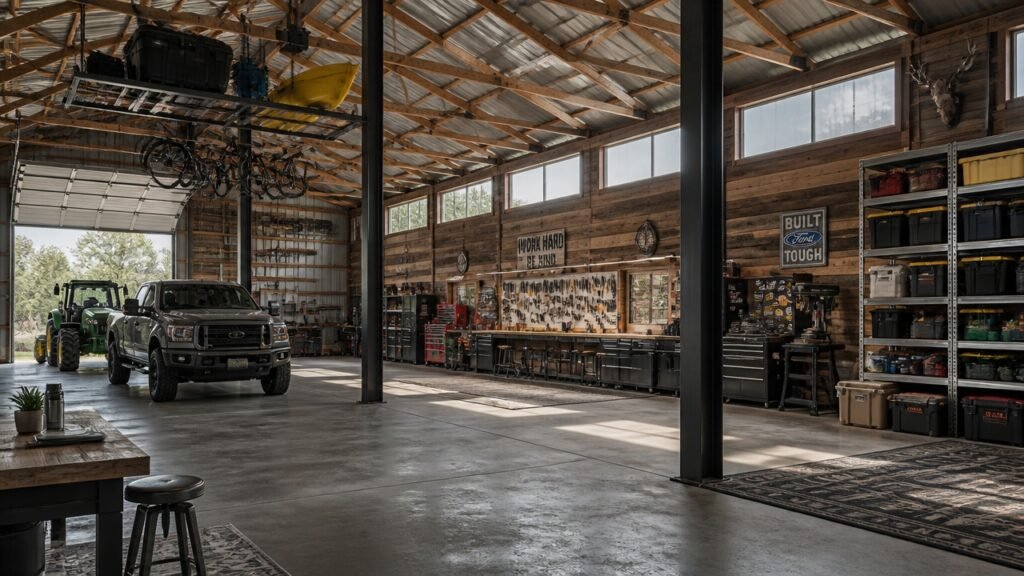
Pole barn garages have a funny way of collecting clutter. One day you have open floor space. The next, you’re stepping over extension cords and wondering where it all went wrong.
The good news? A few smart choices can change everything. With some intentional planning, that chaotic structure becomes a space you actually want to spend time in.
Vehicle storage, tool organization, seasonal items, and workstations all need their own approach.
Get these basics right, and the difference is immediate.
Plan Your Layout First: Map Vehicle and Equipment Flow
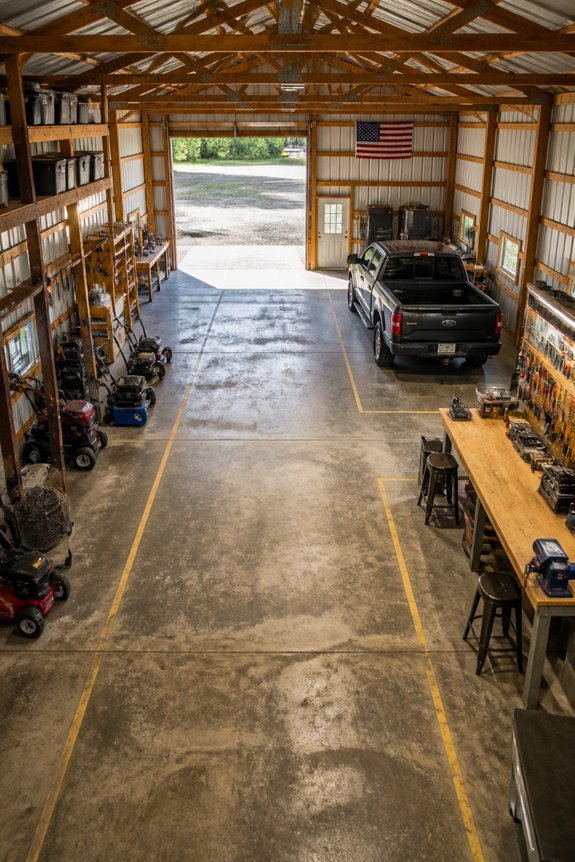
Start with a simple sketch. Mark where vehicles will park, where workbenches will sit, and where storage belongs. This step saves headaches later.
Measure your doorways carefully. Equipment needs to fit through without a struggle. Wide aisles between vehicles protect doors from dings and dents.
Think about how you will move through the space. Cramped pathways slow everything down. Good traffic flow keeps daily work smooth.
Group similar items together. Tools, parts, and seasonal gear each deserve their own zone. This habit stops clutter before it starts.
Place electrical outlets near work areas. You will reach for power often, so make it convenient. Check the floor slope too. Proper drainage protects your investment for years to come.
Create Designated Zones by Activity Type
Organization takes shape when different activities occupy their own dedicated spaces within the pole barn.
A vehicle maintenance zone requires workbenches, tool storage, and adequate lighting for repairs. Parking areas should be separated from work zones to prevent congestion.
Storage sections benefit from shelving units for seasonal equipment, spare parts, and supplies. A dedicated workspace for projects needs a sturdy table and organized tool racks.
Cleaning stations work well near exits, containing mops, buckets, and washing supplies. Clear pathways between zones prevent accidents and improve workflow. Labeling each area helps maintain organization over time.
Maximize Vertical Storage to Free Floor Space
Vertical Storage Solutions for Your Pole Barn
Wall and ceiling space often sits empty in pole barns. Vertical storage changes that. It turns unused areas into useful storage.
Wall Systems
Mount shelves, pegboards, and hooks on your walls. These hold tools, small equipment, and supplies. Everything stays visible and within reach.
Overhead Options
Ceiling racks work great for seasonal items and containers. Suspend them from joists to keep bulky gear off the floor. Less-used items stay accessible but out of the way.
Smart Organizers
Magnetic strips keep metal tools handy. Labeled bins stack neatly against walls. Ladder racks store lumber upright. Each solution clears more floor space.
The Benefits
Clean floors mean room for vehicles and workspace. You gain organized storage without building additions. Daily activities flow better with open floor areas.
Add Overhead Loft or Mezzanine for Seasonal Gear
Add Overhead Loft or Mezzanine for Seasonal Gear****
Christmas decorations. Summer lawn chairs. Winter sports gear. These items pile up fast in a typical pole barn. An overhead loft or mezzanine frees up your floor for vehicles and projects. These platforms tap into empty airspace above your head. They create dedicated storage zones for items you only need now and then.
Steel beams handle heavy loads of boxes and bins. Good ventilation keeps moisture away from your stored items. Sturdy stairs or ladders give you safe access. Railings add extra protection up top. This solution works best for things you rarely use. Everything stays accessible but out of your way.
Mount Pegboards and Shelving for Daily-Use Tools
Pegboards and shelving keep your daily tools within easy reach. Unlike lofts that hide occasional items, these systems put regular equipment right where you need it.
Pegboard Setup
Install pegboards on interior walls to store hand tools. Hang hammers, wrenches, screwdrivers, and pliers on hooks at eye level. Different hook sizes let you customize the layout for any tool type. This setup cuts down search time and keeps your workflow smooth.
Shelving Solutions
Add metal or wooden shelves for heavier gear. These units handle power tools, paint cans, and hardware boxes with ease. Organize everything by category and function. Workers can grab what they need instantly during garage projects.
Build a Central Workbench Station
A central workbench station anchors most pole barn projects. Choose a sturdy surface about 3 to 4 feet long. Plywood or solid wood both work well.
Mount a bench vise within easy reach. Add clamp holders and magnetic strips nearby. These keep your tools organized and close at hand.
Drawers or rolling tool chests underneath store fasteners and hardware. Everything stays dust-free but accessible.
LED shop lights overhead brighten the space. Good lighting improves accuracy on detailed tasks.
Place the workbench away from busy walkways. You’ll face fewer interruptions and avoid potential accidents.
Wire Strategic Lighting and Power Where You Work
Good lighting and well-placed outlets turn your pole barn into a workspace that actually works. LED shop lights on ceiling joists cast bright, even light across your surfaces. You will see fewer shadows and experience less eye strain as you tackle projects.
Run electrical circuits along walls or overhead. Position outlets near your workbench, tool storage, and equipment zones. Heavy-duty extension cords or permanent wiring let you run multiple tools at once. Weatherproof covers protect connections in unfinished spaces. Motion-sensor lights in storage areas save energy and keep you safe when grabbing materials after dark.
Frequently Asked Questions
What Type of Flooring Is Best for a Pole Barn Garage?
Concrete flooring is ideal for pole barn garages due to its durability, ease of maintenance, and cost-effectiveness. It withstands heavy vehicle weight, resists stains, and requires minimal upkeep compared to alternative flooring options.
How Much Does It Cost to Build a Pole Barn Garage?
Building costs typically range from $5,000 to $25,000, depending on size and materials. Like constructing a foundation for dreams, expenses fluctuate based on dimensions, location, and customization choices builders select.
Do I Need Permits to Construct a Pole Barn Structure?
Most jurisdictions require permits for pole barn construction. Requirements vary by location, building size, and intended use. One should contact local building departments to determine specific permit needs, zoning regulations, and inspection requirements before construction begins.
What Climate Control Options Work Best for Pole Barns?
One might think pole barns naturally regulate temperature, yet they notoriously don’t. Effective options include insulation, ventilation systems, and mini-split heat pumps. Portable units work acceptably for smaller spaces, while radiant heating suits larger structures best.
How Do I Protect Tools and Equipment From Rust and Moisture?
Tool and equipment protection requires proper ventilation, dehumidifiers, and moisture control systems. Owners should apply protective coatings, use rust inhibitors, store items on elevated platforms, and maintain regular maintenance schedules to prevent corrosion effectively.
Conclusion
Implementing these seven strategies transforms pole barn garages into infinitely organized spaces. Thoughtful layout planning, activity zones, vertical storage, overhead lofts, pegboards, workbenches, and strategic lighting create functional workshops. Homeowners gain thousands of cubic feet of usable storage and workspace. This systematic approach eliminates clutter, streamlines projects, and maximizes every square inch available in pole barn structures.