
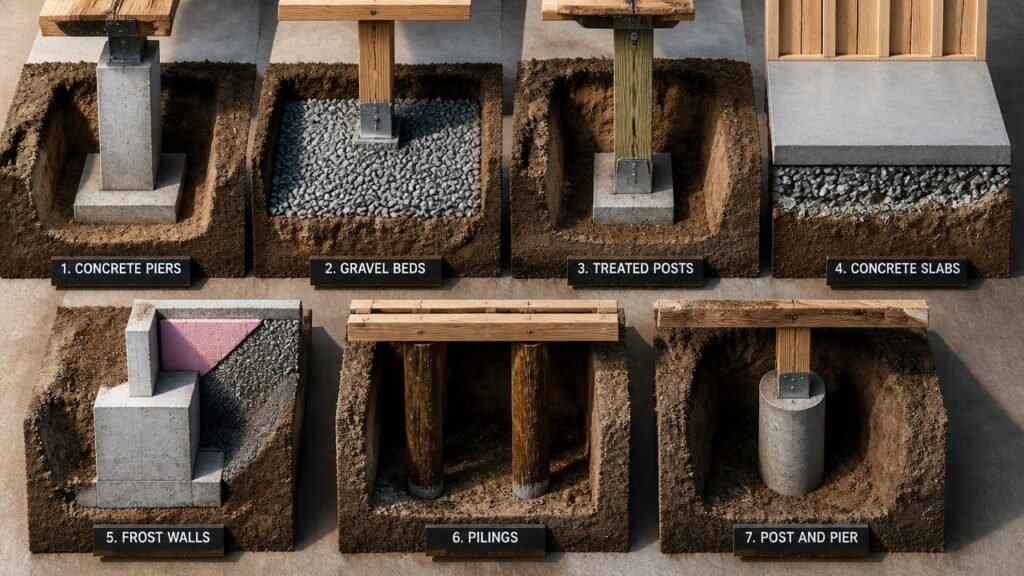
Pole barn foundations aren’t one-size-fits-all. The ground beneath your feet, your local weather patterns, and how you plan to use the space all shape which route makes sense.
Some builders swear by concrete piers. Others lean toward gravel bases, frost-protected shallow foundations, or full slabs. Each approach carries its own trade-offs between upfront cost and how well it holds up over time.
The sweet spot usually lies somewhere between durability, budget, and what you actually need from the building. Taking time to weigh these factors upfront saves headaches down the road.
Pole Barn Foundations: 4 Decision Factors That Matter Most
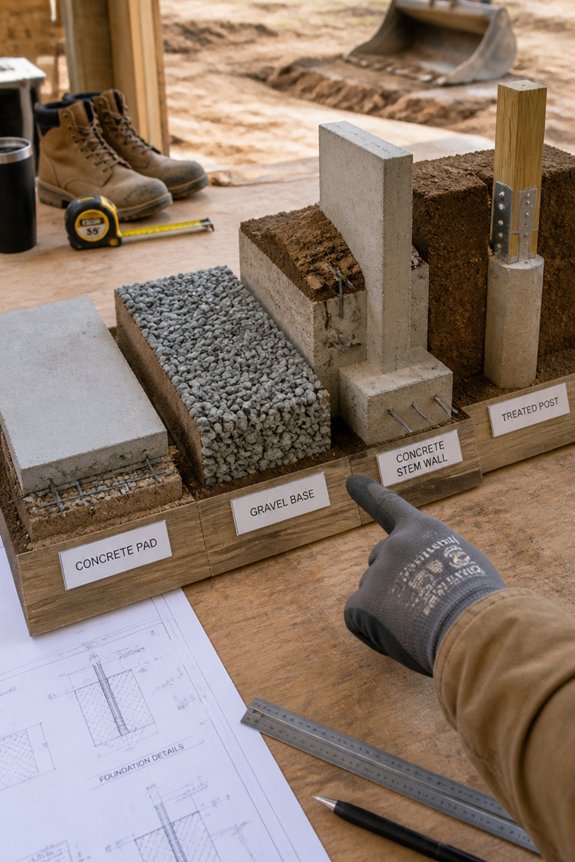
When constructing a pole barn, your foundation choice shapes everything. It affects durability, cost, and long-term performance. Four key factors should guide your decision.
Soil conditions come first. Sandy soils drain fast but offer less support. Clay soils hold steady yet trap moisture. Each type needs different drainage and bearing strategies.
Budget shapes your materials. Concrete pads, gravel bases, and continuous foundations each carry different price tags. Match your spending to your needs.
Intended use changes everything. A simple storage barn faces lighter demands than a commercial workshop. Plan for the loads your space will actually carry.
Local climate sets your depth requirements. Freeze-thaw cycles push footings below frost lines. This prevents settling and protects your structure over time.
Concrete Piers: The Gold Standard Pole Barn Foundation
Concrete piers are the most reliable foundation for pole barns. They work well in most soil types and applications.
These cylindrical posts measure 12 to 16 inches in diameter. They extend below the frost line to prevent frost heave damage.
Installation is straightforward. Crews drill holes 4 to 6 feet deep based on your climate zone. Then they pour concrete around the support posts.
You get excellent longevity with this method. Concrete resists decay and pest damage far better than wood-only foundations.
The piers adapt to various soil conditions. They provide stable, level support for structures up to 60 feet wide.
Costs run $150 to $300 per pier. This makes them economical compared to full concrete slabs.
Gravel Bases: Budget-Friendly but Limited Durability
Gravel bases give you a simpler, more affordable option than concrete piers. They work by spreading compacted gravel beneath your pole barn posts. You’ll need minimal equipment and labor to get started.
This method fits temporary structures or tight budgets in well-drained areas. Gravel won’t hold up forever, though. It settles unevenly over time and causes structural shifts. Wet climates create drainage headaches that speed up deterioration. You’ll need to re-compact and add fresh material every year.
Most building codes limit gravel foundations to non-permanent buildings. Some areas require extra support systems for anything permanent. Check local requirements before you commit to this route.
Frost-Protected Shallow Foundations for Cold Climates
Frost-protected shallow foundations solve freeze-thaw damage in pole barns. They extend below the frost line, usually two to four feet deep. Soil expansion from freezing pushes structures upward and causes cracking. This design stops that problem.
Installation starts with perimeter trenches. Builders add gravel drainage, then concrete footings. Insulation materials backfill the space. The method works well in Minnesota, Wisconsin, and similar northern areas.
Costs run moderate to high compared to gravel bases. The upfront investment pays off over time. Maintenance and repair expenses drop considerably. Performance stays strong for decades in freeze-thaw conditions.
Full Concrete Slabs: Maximum Protection and Usable Space
Full concrete slabs give pole barn owners a solid, level surface across the entire building footprint. Many choose this option for the complete protection it offers.
This foundation keeps out ground moisture, insects, and rodents entirely. It also handles heavy equipment storage, workshops, and livestock areas with ease.
Installation Basics
Proper site preparation matters most. You’ll need grading and drainage planning to stop water from pooling around your slab.
Concrete thickness usually runs four to six inches. Contractors reinforce it with rebar or wire mesh for extra strength.
Cost and Durability
Full slabs cost more upfront than other foundation types. Still, they last decades with minimal upkeep.
You won’t deal with crawl space maintenance ever again. That alone saves time and money over the years.
Cold Climate Tips
Freeze-thaw cycles hit hard in northern regions. Ask your contractor for air entrainment in the concrete mix. This step prevents cracking when temperatures swing.
Treating the Middle Ground: Hybrid Foundation Approaches
Hybrid foundation approaches give you the best of both worlds. They mix elements from full slabs with simpler options. This creates a practical middle path for pole barn builders.
One popular method pairs a gravel base with concrete piers at post locations. This setup cuts material costs and improves drainage at the same time.
Another option uses partial concrete slabs. You pour concrete only in high-traffic or storage zones. The rest stays as compacted gravel.
Some builders prefer concrete strips along the perimeter edges. These protect against weather and erosion without paving the entire floor.
These combinations let you customize based on your specific needs. Your budget and intended barn usage shape the final design.
Installation Costs and Maintenance: What to Expect Long-Term
What costs should pole barn owners expect when installing and maintaining their chosen foundation?
Installation expenses vary greatly across foundation types. Concrete slab foundations typically cost $3 to $8 per square foot. Post footings range from $2 to $5 per hole. Hybrid approaches combining concrete and gravel fall between these ranges.
Long-term maintenance differs by type. Concrete requires periodic sealing, costing $0.50 to $2 per square foot every 3-5 years. Gravel foundations need annual raking and occasional replenishment at $200 to $500 annually. Post footings demand inspection for frost heave and settling. Repairs cost $500 to $2,000 per post replacement. Budget accordingly.
Frequently Asked Questions
Can I Convert My Existing Pole Barn to a Different Foundation Type Later?
Converting an existing pole barn to a different foundation type is possible but challenging. It requires lifting the structure, removing the current foundation, installing new support systems, and ensuring proper alignment. Professional assessment is essential before attempting conversion.
Which Foundation Option Works Best for Wet or Poorly Draining Soil Conditions?
While concrete slabs sink in saturated ground, elevated post foundations thrive there. Owners should choose post-frame systems with concrete piers extending below frost lines, ensuring proper drainage and structural integrity despite moisture challenges.
Do Pole Barn Foundations Require Permits or Professional Engineering Inspections?
Pole barn foundations typically require permits and professional engineering inspections in most jurisdictions. Local building codes mandate these requirements to verify structural safety and compliance with soil conditions and load specifications.
How Do Different Foundations Affect Resale Value or Property Assessments?
Foundations make or break a property’s value. Concrete piers and grade beams enhance assessments markedly, while inadequate footings may trigger appraisal concerns. Professional installation and proper documentation substantially influence buyer confidence and resale pricing.
What’s the Typical Lifespan of Each Pole Barn Foundation Type?
Concrete piers typically last 50+ years, treated wood posts 15-25 years, and concrete slabs 40-50 years. Steel posts offer the longest lifespan, exceeding 75 years, while gravel foundations require frequent maintenance and replacement every 5-10 years.
Conclusion
Selecting a pole barn foundation requires weighing soil conditions, climate, budget, and intended use. Concrete piers suit most situations, gravel bases work temporarily, and frost-protected foundations prevent freeze damage. Full slabs offer maximum protection, while hybrid approaches balance cost and durability. Which foundation type aligns best with local soil and climate demands? Installation costs vary considerably, so property owners should evaluate long-term maintenance expenses before deciding.