
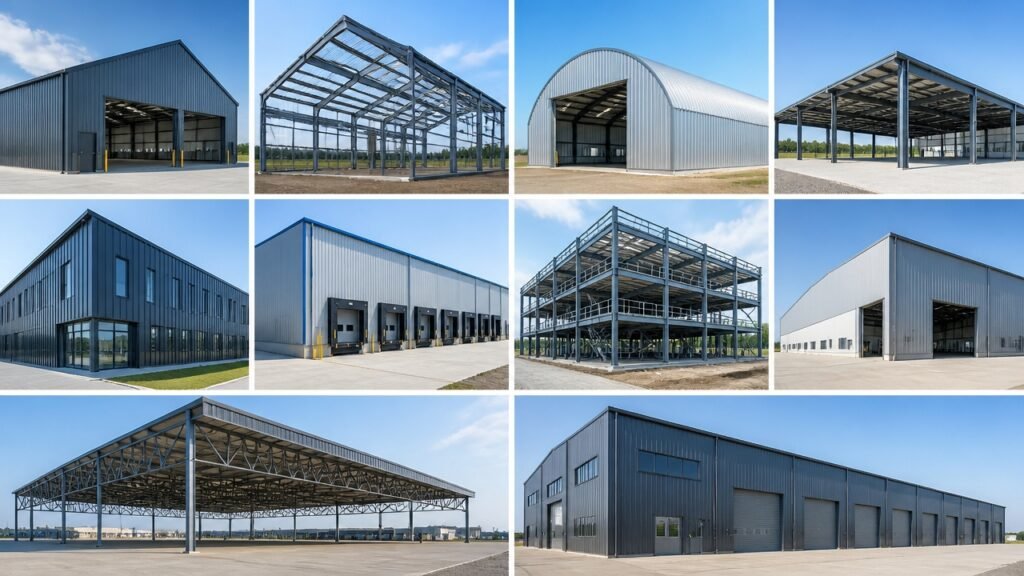
Commercial steel buildings have quietly transformed how businesses think about space. The right design can simplify daily operations while keeping costs in check, which is something every growing company appreciates.
Open-span layouts feel almost airy by removing interior columns entirely. Clear-span warehouses cut per-square-foot expenses, and multi-story frames make smart use of vertical space you already own.
Modular designs grow alongside your business, so you’re not rebuilding from scratch every few years. High-bay structures turn ceiling height into usable storage, which matters more than you might expect.
Each approach touches daily workflow and long-term spending in its own way. Finding the right fit simply means matching your space to how you actually work.
Open-Span Designs: Eliminating Interior Columns for Maximum Flexibility
Understanding Open-Span Designs
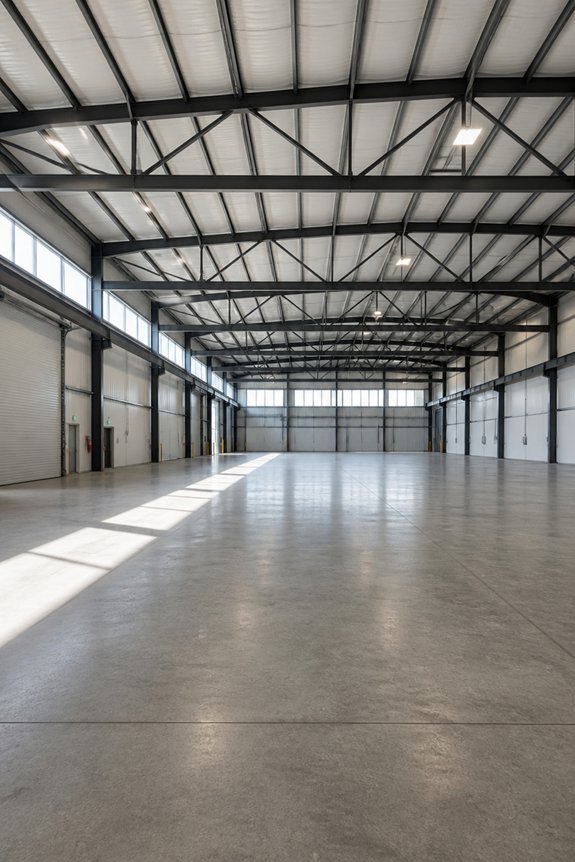
Modern commercial steel buildings often use open-span designs. These remove interior support columns entirely. The result is clear, unobstructed floor space.
Steel trusses and beams carry the building’s weight. They distribute loads across perimeter walls instead. This eliminates obstacles throughout the interior.
Benefits for Your Business
You gain flexible layouts for warehouses, retail, or manufacturing. Large equipment fits easily. Workflows can shift as needed. Future renovations require no structural changes.
Buildings can span 100 to 300 feet with proper engineering. Adaptable square footage supports growth. Sight lines improve across open floors. Remodeling costs drop when operations evolve.
Clear-Span Warehouses: Unobstructed Floors Cut Your Per-Square-Foot Cost
Clear-span warehouses eliminate all interior columns. This creates uninterrupted floor space from wall to wall. You get more usable storage area in every square foot.
Lower Costs, Better Efficiency
Maximizing usable space directly reduces your per-square-foot costs. Operations run smoother without columns in the way. Taller stacking becomes possible. Larger equipment moves freely. You can rearrange inventory however you need.
Material handling stays simple when nothing blocks your path. Damage risk drops. Layout changes take less time and effort.
Built for Your Business
Steel clear-span structures typically run 40 to 200 feet wide. They suit distribution centers, manufacturing plants, and logistics hubs alike.
Construction costs stay lower. Maintenance demands decrease over time. For businesses that need extensive, flexible storage, these warehouses deliver real economic advantages.
Multi-Story Steel Frames: Stack Revenue With Vertical Space
Clear-span warehouses spread out horizontally. Multi-story steel frames build up instead.
This design doubles or triples usable space on tight lots. Real estate costs drop per square foot. Steel handles four to six stories without heavy foundation work.
Tenants layer their operations. Manufacturing sits below. Storage fills the middle. Offices top the building. Elevators and stairs keep everything connected.
Urban sites with steep land prices benefit most. Owners collect rent from several tenants at once. Revenue per acre climbs while the structure stays efficient and code-compliant.
High-Bay Designs: Reach Upward Without Lifting Your Budget
High-bay designs stack vertical clearance into a single story. Heights reach 40, 50, or even 60 feet overhead. This approach eliminates expensive multi-floor construction.
You still get room for manufacturing equipment, storage racks, and overhead cranes. Steel columns and trusses distribute weight efficiently across wide spans. This reduces material costs compared to traditional multi-story frames.
Warehouse, automotive, and distribution facilities benefit most from this layout. The single-story footprint keeps mechanical systems simple. Electrical routing and climate control become straightforward tasks.
Foundation work costs less. You also avoid vertical circulation expenses like elevators and stairwells. High-bay designs deliver substantial vertical space without stretching your budget.
Single-Slope and Lean-To Designs: Add On Without Starting Over
When your facility needs more room, single-slope and lean-to designs let you expand without tearing everything down. These structures connect directly to your existing building. You gain extra warehouse, storage, or production space quickly and affordably.
Single-slope roofs tilt in one direction. This simple design makes drainage easy and keeps construction straightforward. Lean-to styles attach one side to your current wall. You save on materials and finish installation faster.
Both options suit manufacturing plants, distribution centers, and retail spaces well. They blend with your ongoing operations. Your business grows its capacity while keeping downtime and disruption to a minimum.
Steel-Concrete Hybrids: Fast Builds, Strong Floors
What Steel-Concrete Hybrids Offer
Steel-concrete hybrid construction pairs structural steel frames with reinforced concrete floors and walls. This combination delivers faster build times and durable load-bearing surfaces. Steel columns handle vertical support. Concrete slabs create strong, fire-resistant floors.
Speed and Savings
This method cuts construction schedules by 20-30 percent compared to concrete-only buildings. Warehouses, parking structures, and office complexes use these systems often. Steel erection moves quickly. Concrete pouring follows and cures.
Long-Term Benefits
Labor efficiency and material optimization create cost advantages. Maintenance stays minimal. The structures handle heavy equipment loads with ease.
Modular Designs: Build Now, Expand Later
Start Small, Grow Smart
Modular building design lets you begin with what you need right now. You add more space later as your business changes. Steel frames make this easy. New bays connect smoothly to what’s already there.
Save Money, Keep Your Options
You avoid building too much too soon. That cuts your upfront costs by a lot. When sales pick up or teams expand, new modules go in fast. They use the same foundation and systems you already have.
A Fit for Many Businesses
Growing companies love this approach. Seasonal operations stay flexible. Enterprises with long-term plans keep their future open. Warehouses, retail stores, and offices all work well with modular design.
Built to Last, Built to Match
Quality stays the same across every phase. The structure stays sound. The look stays consistent. Expansion becomes simple and affordable.
Pre-Engineered Buildings: Customized Solutions Off-the-Shelf
What Pre-Engineered Buildings Offer
Pre-engineered buildings blend standardized steel components with custom design features. You get tailored structures without the wait of lengthy custom development.
How Leading Manufacturers Deliver
Chief Buildings and VP Buildings provide modular systems that adapt to your specific needs. Design time drops from months to weeks. These buildings handle various setups, including offices, warehouses, and retail spaces.
Your Customization Choices
Adjust roof pitch, wall height, door placement, and insulation levels. Every detail fits your operational requirements.
Key Business Benefits
Enjoy faster construction timelines, predictable costs, and reliable quality control. Pre-engineered solutions sit right in the middle. They work better than basic standard buildings, yet skip the complexity of fully custom designs. Growing companies find them especially practical.
No Columns: The Open-Design Advantage
Open Floor Plans Made Simple
Modern steel buildings give you wide, open spaces without columns getting in the way. This layout lets businesses arrange their floor plans however they need. Warehouses, retail stores, and factories all work better without structural obstacles blocking the way.
Steel Makes It Possible
Steel’s strength lets builders create spans from 40 to 100 feet. No intermediate supports are needed. That means more room for equipment, inventory, and customer traffic. Retailers gain extra display space. Warehouse operators move forklifts freely and set up shelving more efficiently.
This approach cuts material costs and speeds up construction. Daily operations run smoother too.
Plan for Growth: Expandable Frames That Adapt
Steel buildings grow with your business. Expandable frames let you add bays, extensions, or upper levels without touching existing structures.
As operations expand, companies can add warehouse space, manufacturing areas, or office wings. Steel’s modular design connects new sections to established buildings with minimal disruption.
This approach eliminates costly demolition and reconstruction. Businesses build outward or upward on their own timeline. The flexibility supports gradual growth strategies while keeping long-term costs manageable. For companies planning ahead, this adaptability makes steel buildings a smart, practical investment.
Frequently Asked Questions
What Are the Typical Cost Savings Compared to Traditional Concrete Building Construction?
Steel buildings typically offer 20-40% cost savings over traditional concrete construction. Reduced labor requirements, faster assembly times, and minimal site preparation contribute to these economies. Steel’s reusability and lower maintenance expenses provide additional long-term financial benefits.
How Do Steel Building Designs Perform in Extreme Weather Conditions and Earthquakes?
While fragile masonry crumbles, steel frames flex and endure. Steel buildings demonstrate superior performance in extreme weather and seismic events through their inherent ductility, allowing controlled movement rather than catastrophic failure during hurricanes and earthquakes.
What Is the Average Construction Timeline for a Commercial Steel Building Project?
Commercial steel building projects typically require four to six months for completion, depending on project complexity, size, and site conditions. Prefabrication processes accelerate timelines considerably compared to traditional construction methods.
Are Steel Buildings Recyclable and What Environmental Benefits Do They Provide?
Steel buildings prove highly recyclable, with up to 85% of materials recoverable. This dramatically reduces landfill waste, conserves natural resources, and decreases carbon emissions compared to traditional construction methods, making them environmentally advantageous.
What Maintenance Requirements and Lifespan Can Owners Expect From Steel Structures?
Steel structures require minimal maintenance, primarily periodic painting and bolt inspections. With proper care, they last 50+ years, offering exceptional durability and longevity compared to traditional construction materials.
Conclusion
Commercial steel buildings deliver measurable advantages for businesses seeking efficiency. Studies show open-span designs reduce construction costs by up to 20 percent compared to traditional framed structures. Modular and expandable frames accommodate future growth without major renovations. High-bay configurations maximize vertical storage, optimizing per-square-foot expenses. Pre-engineered solutions combine customization with affordability. These design strategies enable companies to streamline operations, control budgets, and support long-term expansion goals effectively.