
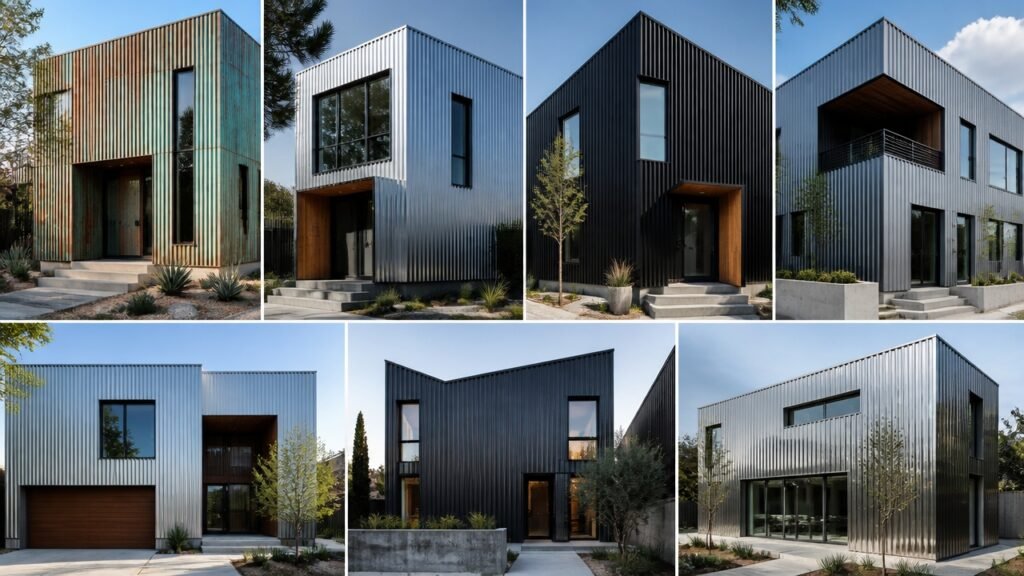
Corrugated metal siding has quietly become a favorite among homeowners looking for something that lasts. It stands up to the elements far better than wood or vinyl, yet carries a visual warmth that surprises people.
You can take this material in several directions. Cover an entire wall for a bold statement, or use it sparingly as an accent alongside stone or wood. The choice between vertical and horizontal corrugation changes how a space feels, stretching it upward or grounding it low.
Color and finish add another layer of personality, from soft matte grays to deeper, weathered tones.
Placement matters just as much as material selection. Running corrugated metal around entryways or framing windows draws the eye to architectural details without shouting for attention. The result reads as modern, but not cold.
Durability and Maintenance: Why Metal Siding Outlasts Wood and Vinyl
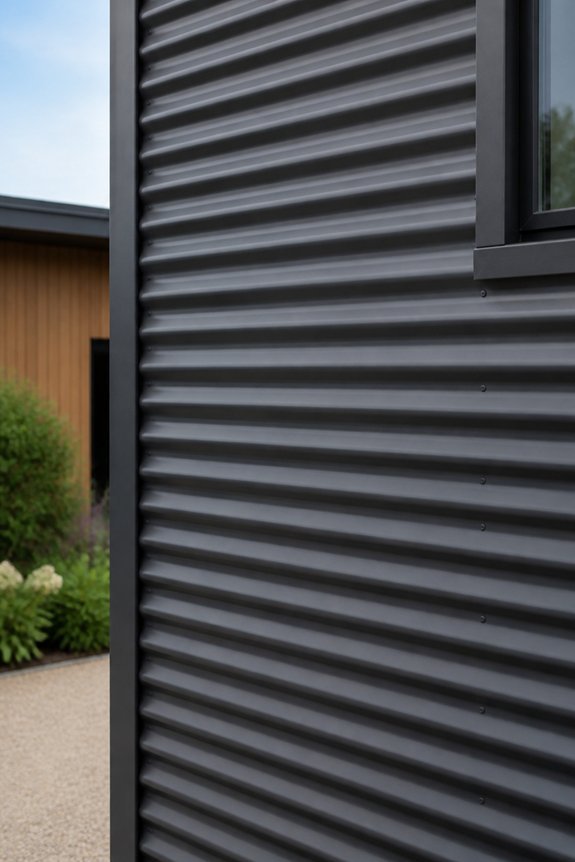
Corrugated metal siding lasts longer than wood or vinyl. It resists rot, insects, and warping. Wood faces all three problems over time.
Vinyl grows brittle in extreme heat or cold. It also fades under sunlight. Metal stays strong for 40 to 60 years.
Maintenance stays simple. Check occasionally for rust. Clear debris from valleys. Galvanized or aluminum coatings protect against corrosion.
Wood needs frequent painting and staining. Repairs add up quickly. Vinyl lasts only 20 to 30 years before replacement.
Metal costs less over time. You replace it less often. Homeowners save money and hassle.
Full-Wall Metal Cladding for Dramatic Curb Appeal
Full-wall metal cladding transforms your home’s exterior. Corrugated sheets cover the entire facade for a bold, unified look.
This approach brings several practical advantages. The continuous metal surface removes visual breaks. You get a sleek, contemporary aesthetic.
Homeowners can choose from various finishes. Options include galvanized, painted, or weathered looks. Colors span neutral grays and blacks to accent shades like charcoal or copper.
Metal cladding suits modern, industrial, and farmhouse-style homes particularly well. Installation covers all exterior walls, including around windows and doors. This ensures complete protection and visual consistency throughout your home.
Mix It Up: Pairing Metal Siding With Stone and Wood
Combining materials adds visual interest to large exterior surfaces. Homeowners often pair corrugated metal with stone accents, wood trim, or brick elements. This creates balanced, appealing aesthetics.
Metal panels work beautifully alongside natural stone bases. The result is a modern-rustic blend that feels both fresh and grounded. Wood beams, soffits, or accent walls complement metal cladding with warmth and texture.
Stone chimneys or pillars anchor metal-sided structures nicely. This mixed approach prevents monotony on expansive walls. It also adds character and depth to your home’s exterior.
Popular combinations include metal siding with timber framing. Corrugated panels paired with stone veneer foundations work well too. Metal walls with wood shutters offer another attractive option.
These pairings suit contemporary, industrial, and transitional design styles. They give homeowners flexibility to match their personal taste.
Less Is More: Using Metal Accents on Key Features
Strategic metal accents create visual focal points without overwhelming your home’s exterior. Apply corrugated metal to specific areas like entryway awnings, garage doors, or chimney surrounds.
This technique emphasizes architectural features while keeping traditional siding elsewhere. Metal panels frame windows beautifully, drawing the eye upward with bold edges. Vertical strips can accent gable ends or define wall sections.
You’ll save on material costs compared to full metal coverage. Designers suggest limiting accents to two or three prominent features per elevation. This restraint prevents visual clutter and lets the metal’s texture and reflective qualities shine.
Corrugation Patterns: How Vertical and Horizontal Styles Affect Your Home’s Look
How does the direction of corrugation influence a home’s exterior appearance? Vertical patterns draw the eye upward. They create an illusion of height and emphasize a home’s vertical lines. This style suits contemporary designs and narrow structures.
Horizontal corrugation patterns emphasize width instead. They create a more grounded, traditional aesthetic. These work well on ranch-style homes and wider facades.
The choice between vertical and horizontal patterns affects perceived proportions. It also influences visual flow and architectural character. Homeowners should consider their home’s existing style first. The roof line and surrounding landscape matter too.
Each pattern produces distinct visual results. These results shape your overall curb appeal.
Metal Siding Colors and Finishes for Modern Homes
Color Choices That Stand Out
Charcoal gray, slate, bronze, and classic silver rank among the most popular selections. Each brings its own personality to modern home design. Darker tones create drama and sophistication. Lighter options offer clean, crisp appeal.
Finish Options Explained
Matte finishes provide a subtle, contemporary look. Glossy surfaces bounce light and add extra durability. Weathered finishes mimic aging metal, perfect for farmhouse or industrial styles.
Climate-Smart Selection
Darker colors soak up heat. This can increase cooling bills in warm regions. Lighter shades stay cooler but need more frequent cleaning. Your local weather should guide this choice.
Finding Your Balance
Think about maintenance, regional conditions, and the look you love. The right combination delivers lasting satisfaction. Take time to weigh practical needs against visual goals.
Metal Siding for Home Additions, Porches, and Covered Structures
Three main areas benefit most from corrugated metal siding. These include home additions, porches, and covered structures like carports or pergolas.
Home Additions
Metal siding gives these extensions lasting strength. It also creates a consistent look when matched to existing roofing materials.
Porches
Corrugated panels protect against weather here. They also keep visual continuity with the main house.
Covered Structures
Carports and pergolas use metal siding for shade and rain protection. These projects need less framing than other options. The lightweight material makes installation simpler on secondary buildings.
Frequently Asked Questions
What Is the Typical Cost of Installing Corrugated Metal Siding Compared to Other Materials?
Corrugated metal siding typically costs $3 to $10 per square foot installed, making it moderately priced. It generally costs less than fiber cement or natural stone but more than vinyl or standard wood siding options.
Do I Need Special Tools or Professional Installation for Corrugated Metal Siding?
Corrugated metal siding installation typically requires basic carpentry tools and skills. While experienced homeowners can install it themselves, most professionals recommend hiring contractors to guarantee proper fastening, weatherproofing, and alignment for peak performance.
How Does Metal Siding Perform in Extreme Weather Conditions Like Hail or Hurricanes?
Metal siding resists hail impact better than traditional materials, though extreme force causes denting. Hurricanes test its strength—properly installed panels withstand high winds, while poorly secured sections fail catastrophically.
Can Corrugated Metal Siding Be Painted or Refinished After Installation?
Corrugated metal siding can be painted or refinished after installation using metal-specific primers and paints. Proper surface preparation, including cleaning and light sanding, guarantees ideal adhesion and longevity of the new finish.
What Are the Environmental and Sustainability Benefits of Choosing Metal Siding?
Metal siding is a golden ticket to sustainability. It’s fully recyclable, requires minimal maintenance reducing waste, lasts decades without replacement, and reflects solar heat, lowering energy consumption and carbon footprints substantially.
Conclusion
Corrugated metal siding serves modern homes like a reliable tool in a contractor’s kit, offering durability, aesthetic flexibility, and low maintenance. Homeowners can choose full cladding for impact, combine materials strategically, or highlight features with accents. Corrugation direction, color selection, and finish options provide customization opportunities. Metal siding works effectively on additions and covered structures, making it a practical choice for contemporary design goals.