
Metal roofing has come a long way from the barn roofs of decades past. Now it is a sought-after choice for homeowners who want durability without sacrificing style.
Two popular styles lead the market, and each brings its own personality to a project.
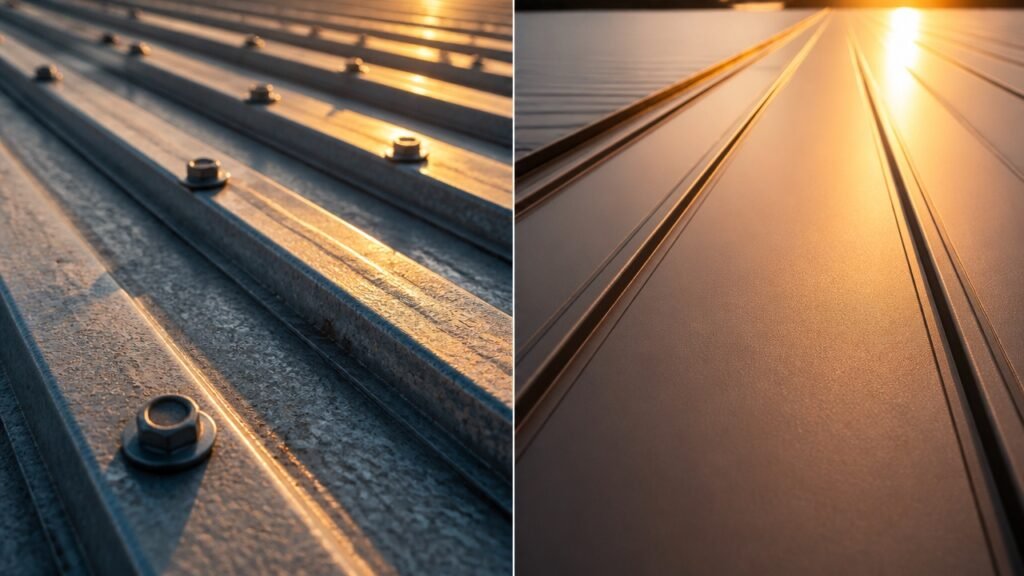
Exposed fastener systems offer an approachable entry point. They show their screws on the surface and carry a friendly price tag of $3 to $5 per square foot.
Standing seam panels take a different approach. Their concealed fasteners create those clean, uninterrupted lines that modern architects love, though they ask for $8 to $12 per square foot.
Choosing between them means weighing more than just upfront costs.
Installation complexity, weather tightness, and how the roof will age in your specific climate all deserve a place in the conversation.
The right fit depends on what matters most to you.
Installation Cost and Labor Requirements
The economics of roofing installation differ markedly between exposed fastener and standing seam systems. Both upfront expenses and long-term budgeting are affected.
Exposed fastener roofs typically cost less initially. Materials and labor range from $3 to $5 per square foot.
Standing seam systems require higher installation expenses. They usually run $8 to $12 per square foot. Specialized equipment and skilled technicians drive this cost up.
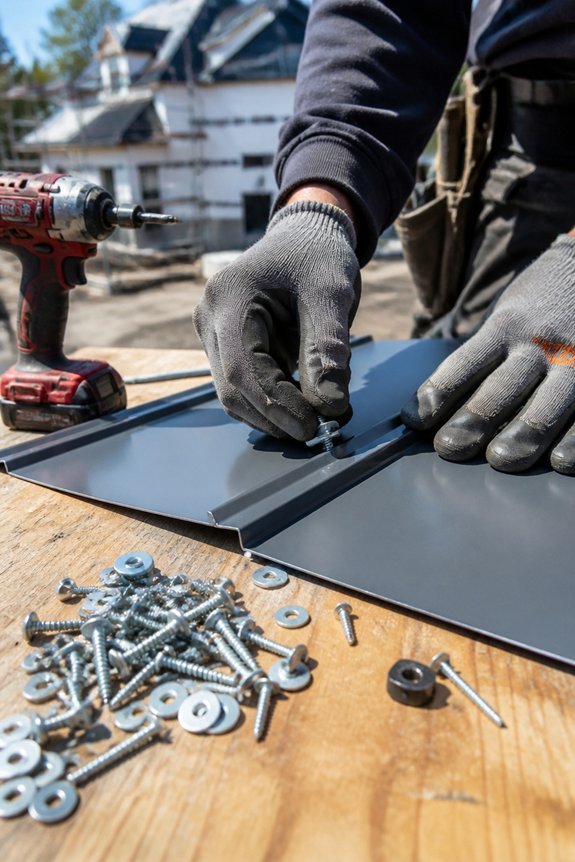
Labor intensity varies greatly between the two options. Exposed fastener installation moves faster with standard tools.
Standing seam demands precise machinery for sealing and forming metal panels. Contractors charge premium rates for this work. Their specialized training justifies the higher price.
Budget considerations should account for these baseline differences. Compare roofing options with these factors in mind.
Which Stops Leaks Better: Weather Resistance Compared?
Installation costs matter upfront. But weather resistance and leak prevention determine long-term value.
Standing seam roofs excel at leak protection. Their continuous, sealed seams eliminate exposed fasteners entirely.
Exposed fasteners create weak points. Water seeps through during heavy rain and freeze-thaw cycles.
Standing seam designs use interlocking panels. These channel water downward and stop pooling.
Exposed fastener roofs need regular upkeep. You must reseal fastener heads as sealant breaks down.
Standing seam roofs weather better. They last longer without water intrusion problems.
How Long They Last and What Maintenance Looks Like
Longevity and maintenance needs differ quite a bit between these two roofing types.
Exposed fastener roofs typically last 20-25 years. You’ll need to inspect them every few years to check fastener tightness, sealant condition, and any rust development. These roofs also require more frequent sealant reapplication and fastener replacement. That adds up to higher long-term maintenance costs.
Standing seam roofs offer 30-40 year lifespans with minimal upkeep. Occasional checks for debris, panel separation, and sealant along seams are usually enough. Since there are no exposed fasteners, you won’t deal with fastener-related issues at all. This reduces both inspection frequency and overall maintenance expenses.
Visual Look and Style Options
Visual Look and Style Options
Exposed fastener roofs show visible metal screws across the surface. This creates a utilitarian look with horizontal lines. The style works well for industrial or agricultural buildings.
Standing seam roofs feature raised vertical seams instead. No fasteners are visible, giving a sleek and modern appearance. Clean lines define this polished look. It suits both contemporary and traditional homes equally well.
Color choices exist for both roof types. Standing seam tends to offer more premium finishes and subtle gradations. Exposed fastener systems typically have simpler color palettes.
Which System Holds Up in Your Climate?
Roof performance depends heavily on your local climate. Different systems handle weather challenges in very different ways.
Humidity and Salt Air
Exposed fastener roofs struggle in coastal areas. Moisture seeps around screw seals and causes corrosion. Standing seam roofs avoid this problem entirely. They have no exposed fasteners for salt spray to attack.
Freeze-Thaw Cycles
Temperature swings take a toll on exposed fasteners. Metal expands and contracts repeatedly, loosening screws over time. Weathertightness suffers as a result. Standing seam systems flex naturally with temperature changes. Their continuous design maintains a secure seal.
High Winds
Wind uplift poses serious risks for fastener-dependent panels. Standing seam roofs perform better here. Their interlocking seams create continuous strength across the entire roof surface.
Intense Sun
UV rays break down sealants faster on exposed fastener roofs. Standing seam construction offers more durable protection. The design shields critical components from direct sun exposure.
The Bottom Line****
Standing seam roofs adapt well to diverse conditions. They handle temperature swings, moisture, and wind pressures with consistent reliability. For challenging climates, they simply hold up better over time.
Frequently Asked Questions
Can Exposed Fastener Roofs Be Installed Over Existing Roofing Materials?
Exposed fastener roofs can be installed over existing roofing materials, though proper preparation is essential. Contractors typically remove old roofing or add adequate underlayment to guarantee proper drainage and prevent moisture accumulation beneath the new system.
What Is the Environmental Impact of Each Roofing System?
Standing seam roofs demonstrate lower environmental impact through superior durability, extended lifespan, and reduced replacement frequency. Exposed fastener systems require more frequent maintenance and earlier replacement, generating greater waste and resource consumption over time.
How Do Insurance Rates Compare Between Exposed Fastener and Standing Seam?
Standing seam roofs typically command lower insurance premiums due to superior durability and weather resistance. Exposed fastener systems attract higher rates because fasteners deteriorate faster, increasing leak and damage risks, thereby raising insurer liability concerns.
Are There Building Codes That Restrict Either Roofing Type?
Like a gatekeeper controlling passage, building codes selectively regulate roofing systems. Most jurisdictions permit both types, though standing seam often receives preference in coastal regions due to superior wind resistance. Exposed fastener roofs face stricter restrictions in hurricane-prone areas.
Which System Is Better for Residential Versus Commercial Applications?
Standing seam roofing suits commercial applications due to superior durability and weather resistance. Exposed fastener systems work well for residential projects, offering cost-effectiveness and easier installation for typical homeowner budgets.
Conclusion
While exposed fastener roofs cost less upfront, standing seam systems deliver better long-term value through superior weather resistance, extended lifespan, and reduced maintenance needs. Initial savings disappear when exposed fasteners require frequent repairs and earlier replacement. Standing seams withstand harsh climates, corrosion, and severe weather better, justifying higher installation costs of $8 to $12 per square foot versus $3 to $5, ultimately protecting property investments more effectively.