
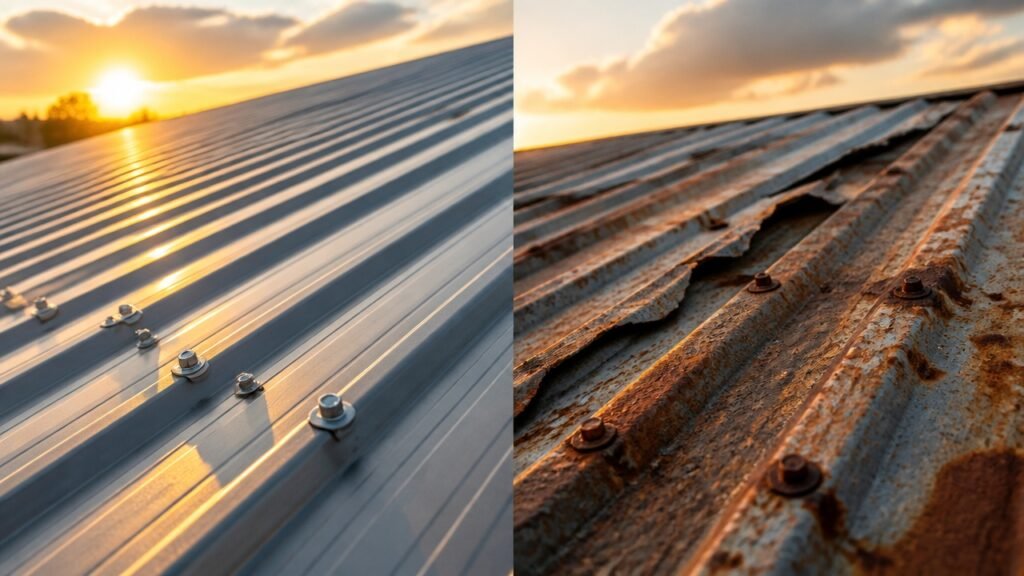
Metal roofing has a way of catching your eye. Maybe it’s the sleek lines on a modern farmhouse, or the weathered patina of an older coastal home. Either way, it’s a choice that tends to stop people in their tracks.
But looks only tell part of the story. This material comes with genuine perks: a lifespan that often stretches past half a century, lower cooling bills in summer months, and a surprising lightness that puts less strain on your home’s structure. These benefits are real and worth weighing.
Then there are the trade-offs. The initial investment stings compared to standard shingles. Rain and hail create a distinct soundtrack that some homeowners love and others learn to tolerate.
And finding the right color or finish to complement your architecture takes patience.
So where does that leave you? It depends on what you value most. For some, the long-term payoff justifies the upfront cost.
For others, the drawbacks tip the scale elsewhere. The key is knowing your priorities before making the call.
Metal Roofs Last 40–70 Years With Minimal Maintenance
Metal roofs stand the test of time. They typically last 40 to 70 years. That’s two to four times longer than asphalt shingles, which need replacement after 15 to 25 years.
This longevity comes from metal’s natural strength. It resists rust, corrosion, and harsh weather. Your roof keeps protecting your home decade after decade.
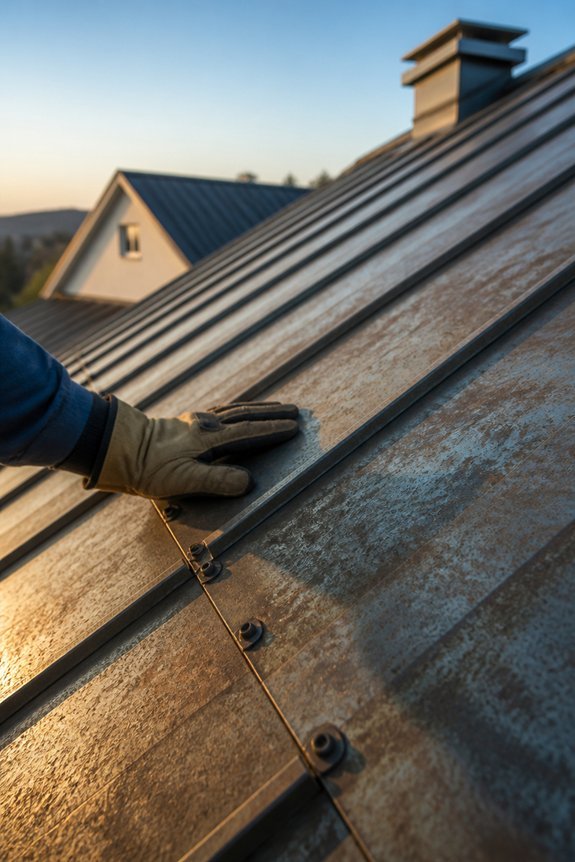
Upkeep stays simple with metal roofing. Clear your gutters once a year. Remove any debris that collects. Check the fasteners now and then. That’s about it.
These roofs handle tough conditions with ease. High winds, heavy snow, and hail won’t phase them. Standing seam styles and metal shingles both offer outstanding durability.
Fewer repairs and a longer life mean real savings. Metal roofing pays off as a smart long-term choice for your home.
Energy Savings That Actually Offset the Upfront Cost
Metal roofing pays you back over time. Its reflective surface bounces sunlight away from your home.
Homeowners typically see energy bills drop 10-25% each year. These reflective coatings keep your roof cooler in summer. Your air conditioner works less. Your electricity costs fall.
Metal roofs also hold warmth inside during winter. This cuts heating costs in cooler regions.
The math adds up nicely. A homeowner paying $200 monthly for cooling might save $20-50 per warm month. Over 15-20 years, total savings often surpass the initial $8,000-12,000 premium. Your upfront investment becomes economically sound through steady utility reductions.
Lightweight Installation May Eliminate Structural Upgrades
Traditional roofing materials are heavy. Asphalt shingles and clay tiles often weigh 750 to 900 pounds per square. Many homes need structural reinforcement before these can go on.
Metal roofing changes this equation. It typically weighs just 50 to 150 pounds per square. Most existing roof structures can handle metal panels without any changes.
Homeowners save money on reinforcement costs. New trusses, beams, and extra support systems become unnecessary. The installation process stays simple and quick. Labor expenses drop as a result.
Older homes gain the most from this advantage. Their original framing often cannot support heavier materials. Costly upgrades become avoidable with lightweight metal options.
Here’s What Metal Roofing Actually Costs Upfront
Metal roofing typically costs $7 to $12 per square foot upfront. Asphalt shingles run much lower at $3 to $5 per square foot.
This price gap reflects what you get in return. Metal lasts decades longer and holds up better against the elements.
Installation labor adds another $1 to $3 per square foot. Your final quote depends on where you live, how complex your roof is, and which metal style you pick.
Standing seam systems sit at the higher end of the range. Metal shingles usually cost less while still delivering solid performance.
Don’t forget removal costs. Tearing off old roofing runs $1 to $2 per square foot.
The math shifts when you look long term. Metal roofs last 40 to 70 years. Asphalt needs replacement every 15 to 20 years. That difference often makes metal the smarter investment over time.
When Noise Becomes a Real Problem (and When It Doesn’t)
When Noise Becomes a Real Problem (and It Usually Isn’t)
Metal roofing gets a bad rap for being noisy. But here’s the truth: a well-installed metal roof sounds about the same as asphalt shingles.
What actually makes the difference? Insulation quality, roof pitch, and your attic setup. Solid underlayment and good insulation block most sound from reaching your living space.
Low-pitched roofs and skimpy insulation do amplify noise. Most homeowners with standard insulation barely notice any extra sound.
Finding Metal Roofing Styles That Match Your Home
Metal roofing offers plenty of choices in style, color, and finish. You can find something that works with nearly any home design.
Standing seam panels create a clean, modern look. Corrugated sheets feel more traditional and rustic. Both options last for decades with proper care.
Material choices include copper, aluminum, steel, and zinc. Each metal ages differently. Copper develops a green patina. Zinc turns a soft blue-gray over time.
Color palettes range from bright silvers to deep charcoal and bronze. Darker colors work well on contemporary homes. Lighter shades suit cottages and farmhouses.
Some metal roofs imitate shingles or clay tiles. This gives you classic curb appeal plus modern durability. It is a practical choice for historic neighborhoods.
Matching Your Home’s Architecture
Industrial homes look sharp with ribbed metal profiles. The vertical lines echo factory aesthetics. Colonial homes benefit from shingle-style metal roofing. It preserves the traditional silhouette.
Drive around your neighborhood before deciding. Note which metal styles feel right on similar homes. Local examples help you visualize the finished result.
Your personal taste matters too. The best roof is one you will enjoy seeing every day.
Frequently Asked Questions
Does Metal Roofing Require Special Permits or Additional Inspections?
Metal roofing installations require permits like filing taxes—bureaucracy’s favorite pastime. Most jurisdictions mandate special permits and additional inspections, ensuring contractors follow building codes and wind-resistance standards properly.
How Does Metal Roofing Perform in Areas With Extreme Weather Conditions?
Metal roofing excels in extreme weather conditions. It withstands high winds, heavy snow loads, and intense UV exposure effectively. Its durability in hurricanes, hail, and temperature fluctuations makes it superior to traditional roofing materials in harsh climates.
Can Metal Roofing Be Installed Over Existing Asphalt Shingles?
Metal roofing can be installed directly over existing asphalt shingles, eliminating removal costs. However, this approach adds weight and may void warranties. Most professionals recommend removing old shingles first for maximum performance and longevity.
What Warranty Coverage Typically Comes With Metal Roofing Installations?
Like a protective shield spanning decades, metal roofing typically includes manufacturer warranties of 20-50 years covering material defects, paint finish degradation, and panel perforation. Installation warranties generally span 10-20 years, varying by installer credentials.
Are There Fire Rating or Insurance Premium Benefits With Metal Roofs?
Metal roofs typically receive Class A fire ratings, the highest classification available. This superior fire resistance often qualifies homeowners for insurance premium discounts, sometimes reducing annual costs by ten to twenty percent.
Conclusion
Metal roofing functions like a sturdy bridge, requiring significant initial construction yet providing decades of reliable passage. Homeowners must weigh substantial upfront costs against long-term durability, energy savings, and reduced maintenance. The investment pays dividends through 40–70 years of protection, though noise concerns and installation complexity demand careful consideration. Success depends on individual circumstances, financial capacity, and climate conditions specific to each property.