
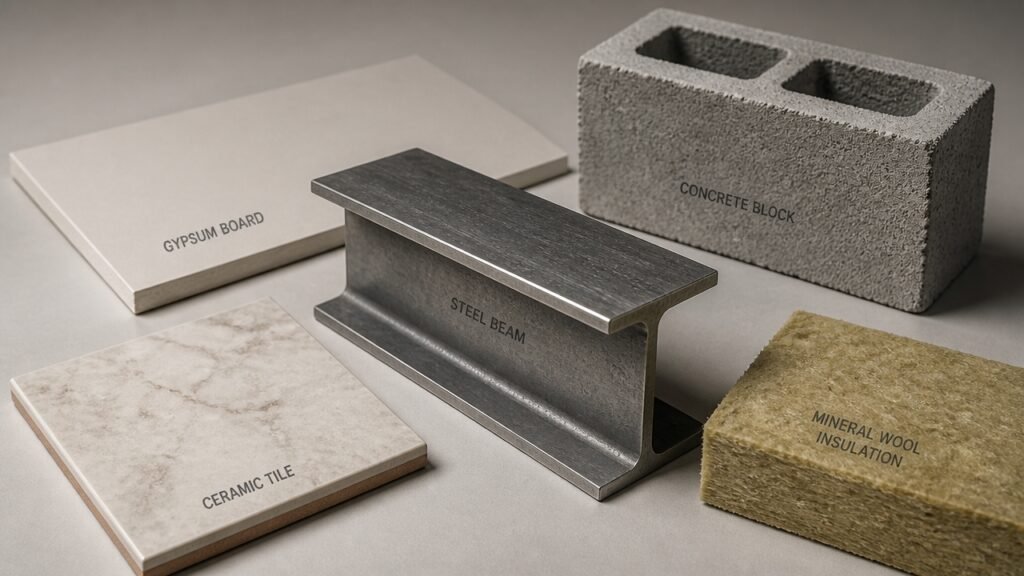
Fire-resistant materials are the quiet backbone of any safe home. They work behind the scenes, ready for the moment you hope never arrives.
Gypsum board, mineral wool, concrete, intumescent coatings, and fire-rated glass each play their own role. Some slow flames from spreading. Others keep walls standing strong or windows clear when smoke fills the air.
Knowing how these materials perform under pressure helps you choose wisely. It is the difference between a house that simply looks good and one that truly protects the people inside.
Gypsum Board: The Workhorses of Fire Protection
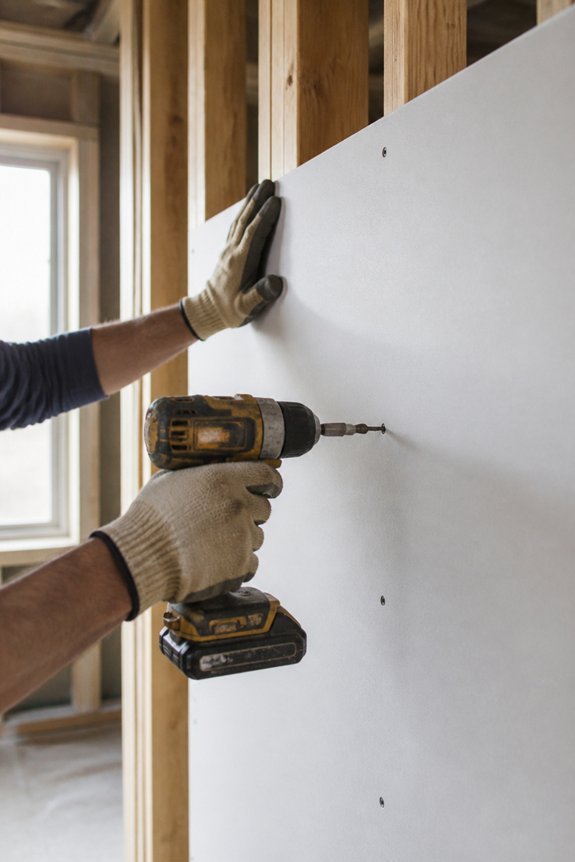
Gypsum board, also called drywall or plasterboard, serves as a primary fire-resistant material in buildings. Its core holds water crystals that release moisture when heated. This slows fire spread effectively.
Type X gypsum board goes further. It contains extra glass fibers and vermiculite for stronger protection. Building codes often require it for walls, ceilings, and stairwells.
Installation means fastening boards to wood or metal framing. Screws or nails work well. Joints need taping and mudding. Done right, this creates reliable fire protection at a reasonable cost.
Mineral Wool: Heat Resistance and Sound Control
Mineral wool insulation comes from spun rock or slag fibers. It serves two key purposes in buildings: stopping fire spread and blocking unwanted noise.
This material handles extreme heat with ease. It stays stable past 1,000 degrees Fahrenheit. You’ll find it in walls, ceilings, and wrapped around pipes.
Sound control is another strong point. Mineral wool soaks up frequencies that travel through walls. External noise stays outside. Conversations stay inside their rooms.
Builders place it between studs, joists, and around ductwork. Once installed, it needs nothing more. No added chemicals. No fire treatments. It simply does not burn.
Commercial sites, factories, and homes all use this material. Any space needing fire safety and quiet comfort benefits from mineral wool.
Concrete and Masonry: Materials That Won’t Burn
Concrete resists fire through its simple mineral makeup. It contains cement, sand, and aggregate. None of these ingredients can burn.
Masonry units like brick and concrete blocks work as excellent fire barriers. They handle temperatures above 2000 degrees Fahrenheit. The materials stay intact without combusting.
Concrete walls keep their strength during fires. This protects the spaces inside. Masonry fireplaces and chimneys safely contain flames.
Stone veneer and tile add extra fire protection to buildings. Structures built with concrete and masonry see less fire spread than wood-framed ones. Insurance companies often give better ratings to these noncombustible materials.
Intumescent Coatings: How They Shield Steel
How Intumescent Coatings Work
Intumescent coatings protect steel in a surprisingly simple way. They expand when exposed to fire. These specialized paints contain compounds that react to heat. They quickly form a thick, insulating char layer. This slows heat transfer to the steel beneath. Temperatures stay lower for longer. Structural failure gets delayed.
What Goes Into These Coatings
Common formulations rely on ammonium polyphosphate. Melamine-based compounds also do the heavy lifting. Together they create the protective barrier. Expansion is dramatic. The coating puffs up to ten times its original thickness. This provides fire ratings from one to four hours.
Where You’ll Find Them
Architects specify these coatings for steel beams and columns. Connections get protection too. Commercial buildings use them widely. Parking structures need this safeguard. Industrial facilities apply them throughout. Fire safety codes often require it.
Keeping Protection Intact
Regular inspection matters for long-term performance. Coatings can wear or get damaged. Small problems get caught early. Integrity stays intact. Effectiveness continues over the building’s lifetime.
Fire-Rated Glass: Safety Without Losing Sight
Fire-rated glass does two important jobs at once. It keeps spaces visible while stopping flames and smoke during emergencies. This special glass stays strong even when temperatures rise. It protects people and property without cutting off sight lines.
Common types include wire glass with metal mesh inside for extra strength. Laminated fire-rated glass uses protective layers between glass sheets. Both options give builders reliable choices for different needs.
Building codes specify exactly where fire-rated glass belongs. You’ll find it on stairwell doors, elevator shafts, and fire-rated wall sections. These locations help people escape safely while containing damage.
Glass ratings typically range from 20 to 90 minutes of protection. The exact time depends on the product classification you choose. Higher ratings mean longer safety windows during actual fires.
Installing fire-rated glass takes careful attention to detail. Proper framing and sealing materials matter just as much as the glass itself. Every element must work together when real fire conditions hit.
Frequently Asked Questions
What Is the Cost Difference Between Fire-Resistant Materials and Standard Building Materials?
Fire-resistant materials typically cost 10-30% more than standard building materials. The price premium varies based on material type, specific fire ratings required, and market availability. Long-term savings through reduced insurance premiums often offset initial expenses.
How Do Building Codes Vary for Fire-Resistant Material Requirements by Region?
Building codes vary considerably across regions; some jurisdictions leave no stone unturned in fire-safety requirements, while others maintain minimal standards. Climate, population density, and local fire history dictate regional specifications for fire-resistant materials and construction methods.
Can Fire-Resistant Materials Be Used in Residential Construction, or Only Commercial?
Fire-resistant materials are used in both residential and commercial construction. Building codes mandate their application in specific areas like kitchens, garages, and basements. However, commercial buildings typically require more extensive fire-resistant material implementation than residential structures.
What Maintenance Is Required to Keep Fire-Resistant Materials Effective Long-Term?
Like sentries standing guard, fire-resistant materials demand vigilant upkeep. Regular inspections identify damage or degradation. Cleaning removes debris that compromises protection. Resealing joints and reapplying protective coatings maintains their defensive barrier against flames.
Are There Eco-Friendly or Sustainable Fire-Resistant Building Material Options Available?
Sustainable fire-resistant options include mineral wool from recycled materials, cork composites, and bio-based resins. Manufacturers increasingly develop eco-friendly alternatives meeting fire codes while reducing environmental impact through renewable sources and recyclable components.
Conclusion
Fire-resistant building materials provide essential protection through multiple mechanisms: gypsum board, mineral wool, concrete, masonry, intumescent coatings, and fire-rated glass work together to slow fire spread and maintain structural integrity. According to the National Fire Protection Association, proper material selection reduces fire-related injuries by approximately 50 percent. Builders who integrate these materials create safer structures that better protect occupants, resist extreme temperatures, and preserve building functionality during fire events.